
Solution Comparison
Air Slide vs Belt Conveyor for Cement — Selecting the Right Conveying System
Air slide conveyors and belt conveyors are both widely used in cement plants, but they serve fundamentally different roles based on material characteristics and plant layout. This comparison helps plant engineers select the optimal conveying system by evaluating each technology against real-world operational criteria.
Trusted by leading industrial brands



Air Slide Conveyor vs Belt Conveyor

Material Suitability
- Air Slide Conveyor
- Air slides are designed exclusively for fine, dry, fluidisable powders such as cement, fly ash, and raw meal with particle sizes below 100 microns. They cannot handle coarse, moist, or sticky materials, which limits their application to specific points in the cement process.
- Belt Conveyor
- Belt conveyors handle a broad spectrum of materials — from fine powders to coarse lumps up to 300 mm — including limestone, clinker, coal, and cement. This versatility makes them the default choice for most material transport stages in a cement plant.

Energy Consumption
- Air Slide Conveyor
- Air slides use gravity as the primary driving force, requiring only a low-pressure blower (typically 250–500 mmWC) for fluidisation. Energy consumption is minimal — often 60–70% lower than a belt conveyor for equivalent cement transfer rates over short distances.
- Belt Conveyor
- Belt conveyors require continuous motor-driven operation with energy consumption proportional to conveying length, belt speed, and material load. For long-distance or inclined conveying, energy costs are significant but justified by the volumetric capacity.

Maintenance Requirements
- Air Slide Conveyor
- Air slides have no moving parts in the material path — no belts, idlers, or pulleys to wear. Maintenance is limited to blower servicing and periodic inspection of the fluidising fabric. This results in very low downtime and maintenance costs over the equipment lifecycle.
- Belt Conveyor
- Belt conveyors involve regular maintenance of idlers, pulleys, belt splices, scrapers, and alignment mechanisms. Idler failure and belt mistracking are common issues in dusty cement plant environments, requiring planned preventive maintenance schedules.

Conveying Distance & Inclination
- Air Slide Conveyor
- Air slides are effective for short to medium distances (up to 50–60 metres) and require a minimum downward slope of 6–10 degrees to maintain gravity flow. They cannot convey material uphill or over long horizontal distances without intermediate boosting.
- Belt Conveyor
- Belt conveyors can transport material over distances from a few metres to several kilometres, and can negotiate inclines up to 18 degrees (or higher with chevron belts). They offer far greater flexibility in plant layout and routing.

Dust & Spillage Control
- Air Slide Conveyor
- Air slides are fully enclosed systems with zero dust emission and zero material spillage during operation. This makes them ideal for conveying cement and fly ash in areas where dust control is critical for environmental compliance and housekeeping.
- Belt Conveyor
- Belt conveyors require additional dust suppression measures — enclosures, wind boards, dust covers, and transfer point skirt systems — to control fugitive emissions. Spillage at transfer points and return-side carryback are common operational challenges.

Choosing the Right Material Handling Solution
Best Fit for Air Slide Conveyor
Choose air slide conveyors when transporting fine, dry, fluidisable powders like cement or fly ash over short distances with available elevation drop. They are ideal for silo-to-packer lines, cement mill discharge, and inter-silo transfers where dust-free, low-maintenance operation is a priority.
Best Fit for Belt Conveyor
Choose belt conveyors when handling coarse or mixed-size materials like limestone, clinker, or coal, when conveying over long distances or inclines, or when the material is moist, sticky, or not amenable to fluidisation. Belt conveyors are the workhorse for most primary material transport in cement plants.
Our Advice
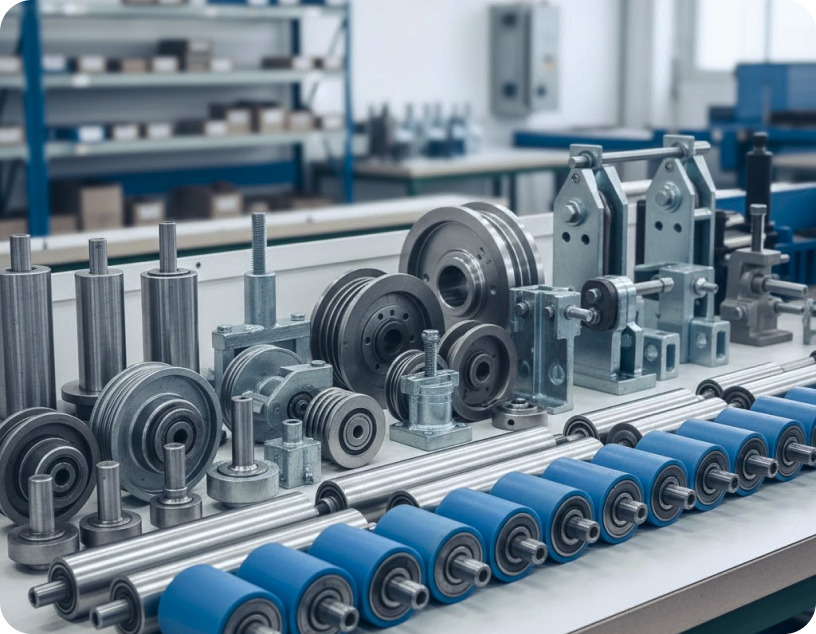
Both systems have clear, non-overlapping application zones in a well-designed cement plant. UGES manufactures belt conveyors with heavy-duty idlers and precision-balanced pulleys engineered for the abrasive conditions in cement plants. For applications where belt conveyors are the right choice, our equipment is designed for extended idler life and reduced maintenance downtime.
What Our Clients Say
United Global helped us improve material flow and reduce recurring spillage in a critical conveyor section. Their engineering approach was practical, responsive, and well aligned with the operating conditions we face in Spain.
Carlos MartínThe Repeat Client 
We needed a partner who understood bulk material handling beyond component supply. United Global delivered a solution that improved reliability, reduced dust around transfer points, and supported our team from assessment through implementation.
Javier RomeroThe Satisfied Customer 
What stood out was their ability to adapt the solution to our plant layout and throughput requirements. The upgrade improved housekeeping, reduced material loss, and gave our operations team more confidence in day-to-day performance.
Laura NavarroThe Valued Partner 
United Global combined strong technical support with cost-effective execution. Their recommendations were clear, the installation support was dependable, and the final result helped us improve conveyor performance without a full system replacement.
Miguel SerranoThe Satisfied Manufacturer
- Industries Served
- 15+
- Years of Experience
- 10+
- Systems Installed
- 500+
- Happy Clients
- 600+