
Rotary Airlock Valves
Rotary Airlock Valve Types: How to Choose the Right One

Vijay Baid
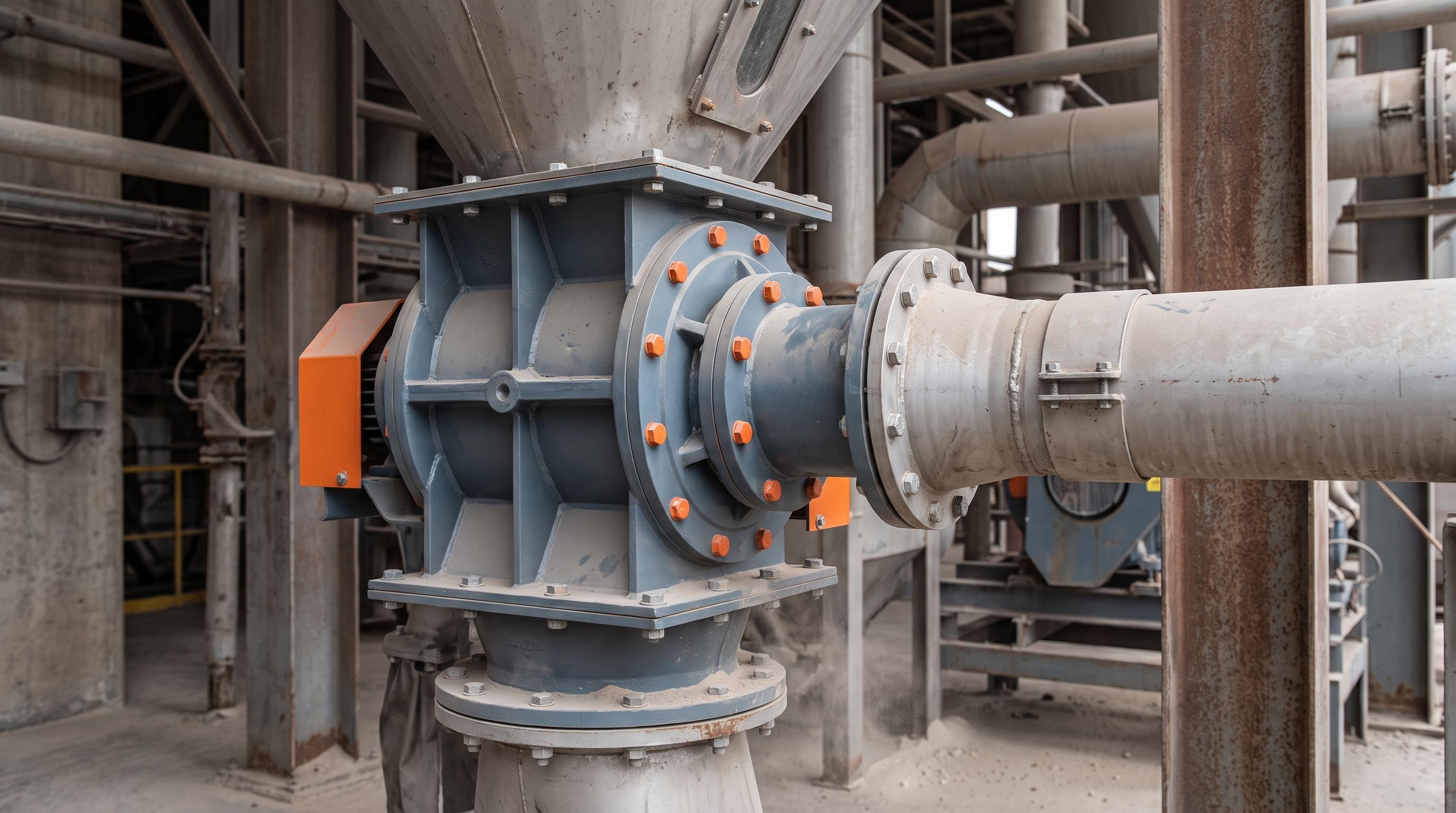
If material drops into a bin or hopper, use a drop-through. If it feeds a pneumatic conveying line, use a blow-through. If the product breaks down and you are losing yield to fines, use an offset. If the layout has no vertical room, use a side entry.
Those are the four rotary airlock valve types, and from the outside they look almost the same. All four run an 8-blade rotor in a Ni-hard cast iron housing and seal to about 22 psi differential. What separates them is how material gets into and out of the valve.
We build all four for cement and power plants, and the type is usually the quickest part of the conversation. It takes about three questions. This guide covers what each one does, which application it fits, and how to match the type to your line.
Material dropping into a bin or hopper takes a drop-through. Material feeding a pneumatic line takes a blow-through. Product that breaks down takes an offset. A layout with no vertical room takes a side entry. Pick the type first, then size the valve and choose the wear package separately.
How to choose the right rotary airlock valve
Three questions, in this order. The first one settles most plants.
Ask this | If the answer is | Choose |
|---|---|---|
Where does the material go next? | Down into a bin, hopper, or vessel | Drop-through |
Where does the material go next? | Into a pneumatic conveying line | Blow-through |
Does the product break down? | Yes, and you are losing yield to fines | Offset |
Is there headroom? | No, the feed comes in horizontally | Side entry |
Offset and side entry are exceptions. They matter a lot when they apply and not at all when they do not.
Rotary airlock valve types compared
Drop-through | Blow-through | Offset | Side entry | |
|---|---|---|---|---|
Material path | In the top, out the bottom by gravity | Conveying air sweeps it from the pocket into the line | Gravity, through an enlarged inlet zone | Enters horizontally from the side |
Best for | Discharge into a bin or vessel | Feeding a pneumatic line | Fragile product | Low headroom |
Rotor | Open-end, 8 blades | 8 blades, air swept through the valve body | Offset-mounted, 8 blades | Side entry, 8 blades, asymmetric pockets |
Inlet size | 8 to 24 in. | 8 to 20 in. | 8 to 20 in. | 8 to 18 in., rectangular |
Max temp | 250°F standard, 570°F variant | 250°F standard, 535°F variant | 250°F standard, 535°F variant | 250°F standard, 535°F variant |
Relative cost | Lowest | Higher, pressure-rated build | Higher, specialty geometry | Higher, specialty geometry |
Drop-through covers the widest range, which is part of why it is the default. It goes from 8 in. up to 24 in. across the inlet, and the high-temperature build runs to 570°F against 535°F for the other three. Side entry stops at 18 in. and takes a rectangular inlet, because the side-feed geometry is doing more work in less space.
What is a drop-through rotary airlock valve?
A drop-through takes material in through the top and drops it out the bottom. Gravity moves the material. The valve meters the rate and holds the pressure difference.
Use it where material discharges straight down:
Under a raw mill cyclone, metering fines into the line
Under a silo, feeding a packaging line at a controlled rate
Under a bag filter hopper, re-injecting collected dust
Under a surge bin or cyclone in any cement or power plant
The rotor is open-end with 8 blades, and it clears itself, so very little material stays behind. That is what continuous cement duty needs. It is also the cheapest of the four to build, which is worth knowing before anyone talks you into something else.
Most of the drop-through valves we get called in to inspect are not failing because of the rotor. The problem is usually the space below them. On plant walkdowns, we keep seeing the same pattern: a shallow chute or cramped box lets material bridge below the valve, back up into the rotor, and make the airlock look guilty for a discharge layout that never had enough slope. Give the discharge room and a drop-through valve will run for years.
What is a blow-through rotary airlock valve?
A blow-through runs the pneumatic conveying line through the bottom of the valve body. The conveying air passes through the valve body, not through the rotor. As each pocket reaches the bottom, that air sweeps the material out of the pocket and into the line.
There is no separate pickup point below the valve. That gives you two things:
No dropout box. Sticky material has nowhere to hang up between the valve and the line.
One component instead of two. The airlock and the feeder are the same unit, which saves space in a tight plant.
The trade-off is that the valve now sits inside the pressure line. The rotor and seals have to hold that pressure, and the bore has to match the line. That build costs more than a drop-through.
Use it for cement raw meal and finished cement going into a conveying line, and for fly ash headed into a pressure line at a power plant.
If you are comparing two types for the same application, the spec sheet is a useful next step before the layout is finalized.
When to use an offset rotary airlock valve
Use an offset when the product breaks down and you are losing yield to fines.
On a standard rotor, the blade tip closes each pocket against the housing. Material caught at that point gets sheared. That does not matter with fine powder. It matters with friable product.
An offset sets the rotor off center in the housing. That creates an enlarged inlet zone, so material enters the pocket with less shear and less compression.
It earns its cost in two cases:
Product you need to protect. Clinker off the cooler, ground cement going into packing, friable additives.
Product where fines cost twice. Degraded material is lost yield and a dust problem in the same shift.
For easy-flowing, non-fragile powder you do not need an offset valve, and we will tell you so. It is a specialty build and it is priced like one. When someone asks us for an offset on plain raw meal, the honest answer is usually that a standard rotor will do the same job for less money.
When to use a side entry rotary airlock valve
Use a side entry when the layout has no vertical room.
A drop-through needs space above and below it. Plenty of plants do not have it. In retrofit layouts, this is usually where the decision gets made: a screw conveyor or horizontal silo outlet leaves enough room to hang a valve, but not enough room to install, inspect, or pull the rotor. That is when a side entry stops being a niche option and becomes the workable layout.
A side entry valve takes material in horizontally through a rectangular inlet on the side of the housing. The rotor pockets are shaped asymmetrically to pick material up from that direction.
Use it where:
A screw conveyor or drag chain discharges into a low-headroom space
A silo outlet feeds horizontally with no room to drop
Dust is tapped from a horizontal duct in a tight spot
A side entry valve solves a building problem, not a material problem. If you have the headroom, use a drop-through instead.
Rotary airlock valve selection for cement and fly ash
The material changes what you specify around the type. In sizing reviews, the two misses we see most often are a density nobody measured at its lightest and a fill factor carried over from a different material. In our guide to sizing a rotary airlock, aerated cement starts around 80 percent fill, light fly ash runs about 65 to 70 percent, and we keep the rotor under 25 RPM because fill falls and wear climbs as speed rises.
Duty | Type | What to add |
|---|---|---|
Raw meal into a conveying line | Blow-through | Abrasion-resistant tips, hard-chrome bore |
Finished cement to a packing line | Drop-through or offset | Offset if fines are costing you yield |
Cyclone or bag filter discharge | Drop-through | Room and slope below the valve |
Fly ash off the precipitator | Drop-through or blow-through | Clearance opened for heat, hardened tips |
Clinker off the cooler | Offset | Ceramic-lined internals |
Coal or petcoke mill dust collector | Drop-through | Explosion isolation rating |
Hot fly ash. Ash off the precipitator can run hot enough to expand the rotor into the housing, which is why the high-temperature build goes to 535°F rather than the standard 250°F. Hot service needs the running clearance set with that expansion in mind. The upset temperature matters more here than the steady-state figure from the heat balance.
Coal and petcoke circuits. That dust burns. A valve under a coal or petcoke mill dust collector is usually the part that stops a dust explosion from spreading through the system. NFPA 660, the standard that consolidated the older combustible dust codes, treats it as an explosion isolation device, and it belongs in the specification before the request for quotation (RFQ) goes out.
What rotary airlock type does not determine
The type decides how material gets in and out. It does not decide two other things.
It does not set the size. Size comes from your feed rate, your bulk density at its lightest, the fill factor for your material, and the rotor speed. A drop-through and a blow-through moving the same tonnage need the same displacement per revolution.
It does not set the wear package. Cement and fly ash are abrasive whichever type you pick. Hardened or adjustable tips, the housing bore, and the running clearance are a separate decision, and they decide whether the valve still seals in two years.
Work in this order: type, then size, then wear package. Picking a model off a catalog first is how a valve ends up matched to the pipe instead of the application.
Common rotary airlock selection mistakes
Choosing the type from what a supplier has in stock instead of the application
Putting a drop-through on a pneumatic line, then fighting bridging in the dropout
Running a standard rotor on friable product and paying for it in fines
Finding the headroom problem after the valve is ordered
Assuming the type sets the size
Leaving the tip package until last, after the budget is committed
How to narrow the right rotary airlock type
In most cases the answer comes out of three checks: where the material goes next, whether the product can take shear, and whether the layout gives you room to install and service the valve. Run those in order and the type is usually obvious.
We manufacture all four types for cement and power plants. Because we build the whole range, we have no reason to push you toward the expensive geometry when the service does not need it. For most rotary airlock duties, the drop-through is the right answer, and we say so even though it is the cheapest thing on the list.
If the design is nearly finalized and you want a second set of eyes on it, our engineers will confirm the type, flag any access or wear risk, and make sure the RFQ reflects the application before it goes out.
Key takeaways
Four types, three questions: where the material goes, whether the product breaks down, and whether you have headroom.
Material into a bin takes a drop-through. Material into a pneumatic line takes a blow-through. That covers most plants.
Offset is for friable product losing yield to fines. Skip it on easy-flowing powder.
Side entry solves a headroom problem, not a material problem.
The type does not set the size or the wear package. Type first, then size, then tips.
Frequently asked questions
A drop-through takes material in the top and drops it out the bottom by gravity, and is the default under hoppers, silos, and dust collectors. A blow-through runs the pneumatic conveying line through the base of the valve, so conveying air sweeps material out of the pocket and into the line. Use a drop-through when material falls into something, and a blow-through when it feeds a pressure line.
When the product is fragile and you are losing yield to fines. The offset sets the rotor off center in the housing, which enlarges the inlet zone and reduces shearing where the blade tip closes the pocket. It suits clinker off the cooler, ground cement going into packing, and friable additives. For easy-flowing powder it is more valve than the duty needs.
Low headroom. The inlet sits on the side of the housing and takes material horizontally, so the valve fits under screw conveyors, drag chains, and horizontal silo outlets where a drop-through will not install. It solves a layout problem rather than a material problem, so use a drop-through if you have the vertical space.
Only where the duty calls for it. A blow-through is built to sit in a pneumatic line and hold its pressure, and it costs more for that build. If material only has to fall from a hopper into a bin, a drop-through does the same job for less and the pressure-rated build goes unused.
No. Sizing comes from the feed rate, the lightest bulk density, the fill factor, and the rotor speed. Two types moving the same tonnage need the same displacement per revolution. Pick the type from the layout and the material, then size it, then choose the wear package.
It depends where the ash goes. Ash dropping from a hopper into a bin suits a drop-through. Ash feeding a pneumatic line suits a blow-through, which also removes the dropout where ash would otherwise bridge. Either way, fly ash is fine, abrasive, and often hot, so the running clearance and the wear package matter more than the type.
The type follows the same rules, but the rating does not. Coal and petcoke dust are combustible, so a valve under that dust collector is usually the device that stops a dust explosion from spreading through the system. It has to be rated as an explosion isolation device under NFPA 660, which is a different specification from a cement or fly ash valve.