
Bulk Material Handling
Mass Flow vs Funnel Flow: Why Silo Discharge Behavior Matters

Vijay Baid
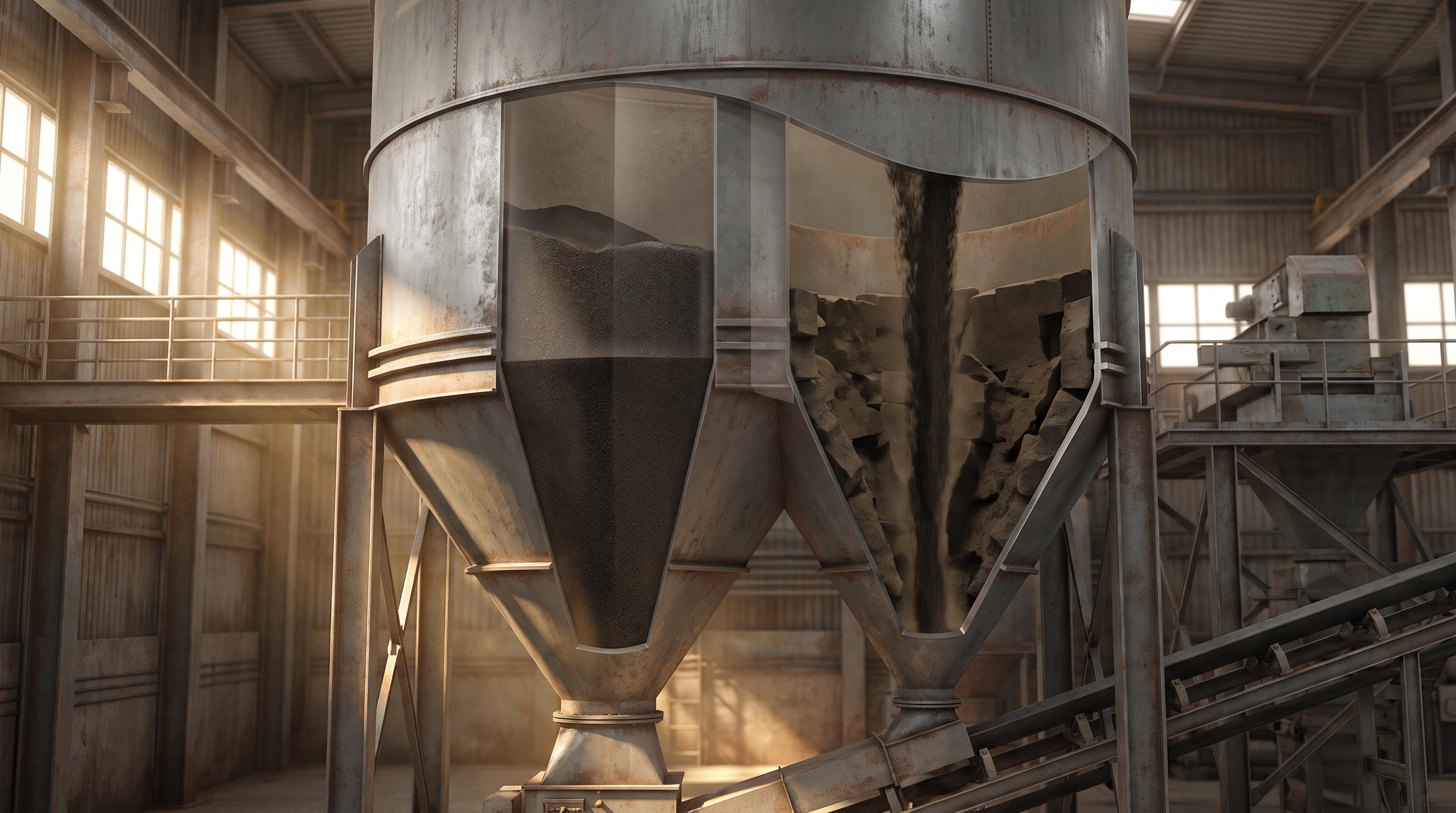
Mass flow moves the full contents of the silo during discharge, which supports first-in, first-out withdrawal and a steadier feed to downstream equipment. Funnel flow drains through a central channel while material near the walls stays still, which raises the risk of ratholing, arching, segregation, and uneven drawdown. In real plants, the result usually comes down to hopper wall angle, wall finish, outlet size, and whether the feeder pulls material evenly across the opening.
Mass flow vs funnel flow is one of the most important choices in silo design. It decides whether stored material leaves the vessel in a controlled way or creates ongoing operating problems. For plant engineers, this is not just a theory question. It affects feed stability, usable storage volume, material quality, cleanup, and how often the team has to step in when flow becomes unreliable.
In a mass-flow silo, material at the walls and material at the center move together when discharge starts. In funnel flow, only a channel above the outlet moves while material around the edges stays still until later, if it moves at all. That one difference changes discharge order, segregation, and how likely the silo is to bridge, rathole, or surge.
This guide explains how each pattern works, where each one fits, what plant teams should watch for, and what to specify before building or retrofitting a silo in cement plants, power plants, and bulk material handling systems.
Why silo discharge behavior matters in real plants
Silo discharge behavior matters because downstream equipment feels the problem first. A kiln-feed bin, fly ash hopper, limestone silo, or additive day bin may look fine at full level, but poor internal flow often shows up later as unstable discharge, material separation, or stranded inventory.
In cement plants, funnel flow often shows up as uneven raw meal withdrawal, buildup near the hopper walls, or changing feed to the next machine. In power plants, cohesive ash or reagent handling can suffer from weak drawdown, arching, or sudden surges after a stagnant core collapses. In other bulk solids systems, the signs usually look like poor feeder performance, uneven batching, or unexplained variation between the start and end of one discharge cycle.
That is why good silo performance starts with the flow pattern, not just storage volume. Two silos can have the same capacity on paper and still behave very differently if their hopper shape, wall finish, and outlet arrangement are different.
Mass flow vs funnel flow: the difference at a glance
The main question is simple: does material slide along the hopper walls during discharge, or does it form a center channel and leave material stuck near the walls?
Feature | Mass flow | Funnel flow |
|---|---|---|
What moves | All material in the vessel moves | Only the channel above the outlet moves first |
Discharge order | First in, first out | First in, last out |
Wall behavior | Material slides on the hopper walls | Material stays still at the walls |
Feed consistency | More stable from full to empty | More likely to show weak drawdown and surging |
Segregation risk | Usually lower | Often higher |
Typical concern | Taller hopper and more wall wear | Ratholing, arching, dead zones, uneven discharge |
Best fit | Cohesive, aeratable, degrading, or segregation-sensitive materials | Coarse, free-flowing materials where segregation is not critical |
If you are comparing silo concepts or reviewing an existing hopper, a spec sheet helps your team check the practical design details that shape discharge behavior before moving into buying or retrofit work.
Mass flow: when the entire silo contents move
Mass flow is usually the better pattern when the process needs steady, reliable discharge. Because the whole contents move together, the outlet sees more even conditions through the full drawdown cycle.
This matters most when the material is cohesive, moisture-sensitive, time-sensitive, or prone to segregation. Powders that cake, compact, aerate, or change with residence time usually do better in mass flow because stagnant wall zones are reduced and the oldest material leaves first.
Mass flow also supports better feed stability. When plant teams need a steady feed to a screw feeder, weigh feeder, rotary valve, or metering system, a mass-flow silo makes the rest of the system easier to control.
Practitioner note: In plant troubleshooting, unstable discharge is often blamed on the feeder first. Many times, the feeder is only showing the real issue, which is that the silo is not drawing the full cross-section of material the way the process expected.
The tradeoff is geometry and cost. Mass-flow hoppers usually need steeper walls and more careful surface selection. That can mean more height, more structure, and more attention to liner wear where abrasive solids are involved.
Funnel flow: when only a central channel moves
Funnel flow is common because it is often easier and less costly to build. The problem is not funnel flow by itself. The problem starts when a silo handling a difficult material falls into funnel flow even though the design team did not want it to.
In funnel flow, the moving core drains first while material at the walls stays in place. That creates the classic failure modes plant teams see in the field:
Ratholing when the center channel empties and leaves a stable column of stranded material around it.
Arching when the material forms a bridge across the outlet and stops discharge.
Segregation when fine and coarse fractions leave the silo at different stages of the cycle.
Flushing or surging when fine, aerated powder collapses into the outlet without warning.
Dead zones where material sits long enough to cake, harden, pick up moisture, or spoil.
Funnel flow can still work for coarse, free-flowing materials where discharge order and segregation are not critical. Many aggregate and ore bins run this way without trouble. As a practical benchmark, Chemical Engineering notes that funnel-flow bins generally flow reliably only with free-flowing solids having particle sizes of at least 1/4 in. That is one reason fine powders and cohesive blends usually need a more careful design.
From the field: In retrofit reviews, a vessel that “mostly works” at high inventory often shows its true flow pattern near the end of drawdown. That is where weak discharge, stranded material, and sudden collapses show up, especially after wall roughness and buildup have changed the hopper surface over time.
Expanded flow: the practical hybrid
Expanded flow is a hybrid setup that combines a mass-flow hopper section at the bottom with a funnel-flow section above it. This can work well when a full-height mass-flow hopper would make the vessel too tall or too expensive.
For large silos in cement, power, or terminal applications, expanded flow can be a practical middle path. The lower section is designed so the moving channel grows enough that a stable rathole cannot remain above. If that transition is too small, however, the silo still acts like a funnel-flow vessel with a more expensive bottom section.
What actually decides the flow pattern
The flow pattern is set by the link between geometry, wall friction, outlet size, and withdrawal conditions. It is not something a drawing note can fix after the fact.
1. Hopper wall angle and wall finish
This is the first driver. Material only slides on the wall when the slope is steep enough and the wall surface is smooth enough for that specific bulk solid. A polished liner, a worn carbon-steel wall, and a corroded hopper may all behave differently with the same product.
2. Hopper geometry
Conical hoppers usually need steeper walls than wedge hoppers because the material converges in two directions instead of one. That is why a wedge hopper with a slot outlet can often achieve mass flow where a cone would need an impractical angle or too much height. A useful rule from Chemical Engineering is that, for a given material, the minimum outlet width needed to prevent arching in a wedge-shaped mass-flow hopper is usually about 50% of the circular mass-flow outlet requirement. That helps explain why slot outlets are often more forgiving.
3. Outlet size
Outlet size must match the failure mode you are trying to avoid. For mass flow, the opening must prevent a cohesive arch. For funnel flow, the opening must be large enough to prevent a stable rathole, which is often the bigger requirement. In outlet-sizing work, Chemical Engineering notes that typical flow-factor values range from 1.1 to 1.7. That is why even small changes in material friction or hopper geometry can change the opening you need.
4. Feeder withdrawal across the opening
The feeder below the silo is part of the flow design. A hopper meant for mass flow only behaves that way when the feeder withdraws material evenly across the full outlet. Poorly matched screws, throttled gates, and uneven withdrawal patterns can bring back funnel-flow behavior even under a good hopper design.
What to specify before you buy or retrofit a silo
Plant teams should specify more than volume and overall dimensions. Good silo performance depends on whether the vessel is built around the real material and the planned withdrawal pattern.
Bulk solid properties: cohesiveness, particle size range, moisture sensitivity, aeration behavior, and wall-friction behavior against the actual hopper surface.
Required flow pattern: mass flow, funnel flow, or expanded flow based on process needs, not habit.
Outlet criteria: opening sized to prevent arching or ratholing under real operating conditions.
Hopper geometry: cone or wedge, wall angles, transition details, and effective outlet dimensions.
Feeder interface: how the feeder will withdraw material across the opening and whether the discharge will stay even from full to low level.
Wall material and liner strategy: because wall friction changes with finish, wear, corrosion, and buildup.
Inspection and maintenance access: especially where buildup, wear, or cleaning will affect long-term discharge behavior.
If your team is comparing a new silo design with a retrofit, a quick engineering review can help confirm the right flow pattern, outlet strategy, and feeder arrangement before the problem gets built into the system.
Common mistakes in silo flow design
Most silo discharge problems are cheap to avoid during design and costly to correct after startup.
Copying a hopper angle from another project without checking the current material and wall finish.
Skipping material-flow testing and relying on rules of thumb for difficult powders.
Sizing the outlet only for arching when ratholing may be the real limiting case.
Using a throttling gate as the main flow-control strategy and disrupting even withdrawal.
Choosing the feeder after the silo instead of designing both pieces together.
Ignoring wall condition over time even though wear, buildup, and corrosion change friction and discharge behavior.
Which pattern should you design for?
If the material is cohesive, aeratable, degrading, or sensitive to segregation, mass flow is usually the safer and more reliable choice. If the product is coarse, free-flowing, and not sensitive to residence time or quality variation, funnel flow may be acceptable and more economical.
The key is to choose the pattern on purpose. A silo that behaves exactly as intended is good engineering. A silo that slips into funnel flow when the process needed mass flow is where repeat cleanup, unstable feed, and ongoing troubleshooting begin.
Key takeaways
Mass flow moves all stored material and supports more stable, first-in, first-out discharge.
Funnel flow discharges through a center channel and is more prone to ratholing, arching, segregation, and dead zones.
Wall angle, wall finish, outlet size, hopper geometry, and feeder withdrawal together decide the real flow pattern.
A wedge hopper can often achieve mass flow with shallower walls than a cone handling the same material.
Many “feeder problems” are actually silo flow-pattern problems that begin above the outlet.
Frequently asked questions
In mass flow, the full contents of the vessel move during discharge, including material near the walls. In funnel flow, only a center channel above the outlet moves first while material at the walls stays still. That changes feed stability, discharge order, and reliability.
No. Mass flow is usually better for cohesive, segregating, aeratable, or residence-time-sensitive materials. Funnel flow can still be a valid and economical choice for coarse, free-flowing solids where segregation and dead zones are not critical.
Ratholing happens when material discharges through a stable internal channel while surrounding material stays in place. It is most common in funnel-flow vessels handling cohesive solids or where the outlet is too small for reliable drawdown.
Yes. A feeder that does not withdraw material evenly across the full opening can force a well-designed hopper into poor discharge behavior. The silo and the feeder must be designed as one withdrawal system.
Expanded flow is useful when a full-height mass-flow hopper would be too tall or too costly. It is often a practical choice for large-diameter silos where the lower section can be designed to remove a stable rathole.
Watch how the surface moves during discharge, inspect the wall condition when the vessel is empty, and compare the operating signs. Center cratering, stranded inventory, weak low-level drawdown, and sudden surges usually point to funnel flow rather than mass flow.
Need help reviewing a silo for mass flow, funnel flow, or expanded flow? UGESL can help your team compare geometry, outlet design, and withdrawal conditions before you commit to a retrofit.