
Conveyor Design
Biomass Handling Conveyors: 5 Common Design Problems

Vijay Baid
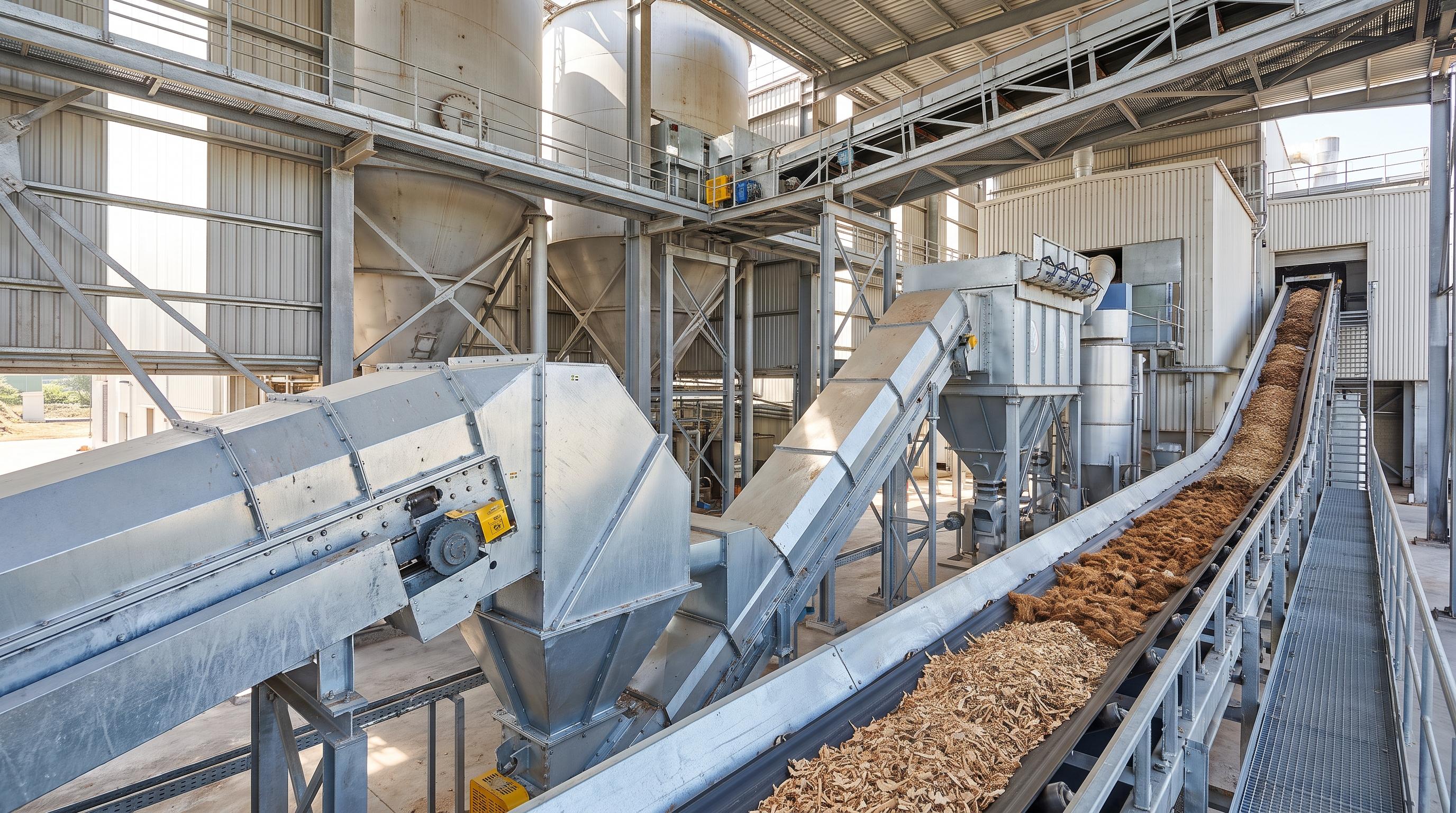
Biomass handling conveyors cannot be designed like standard coal systems. Biomass is lighter, wetter, and often stickier, which can lead to blockages, buildup, wear, and dust problems. Plants usually need better chute design, dust control, wear protection, and in some cases enclosed twin-chain conveyors.
Why Biomass Needs Different Conveyor Design
Biomass handling conveyors are now a reliability decision for thermal power plants using wood chips, rice husk, bagasse, and biomass pellets. When plants handle these fuels with conveyor layouts meant for coal, they often end up with blockages, carryback, dust leakage, and unstable fuel flow.
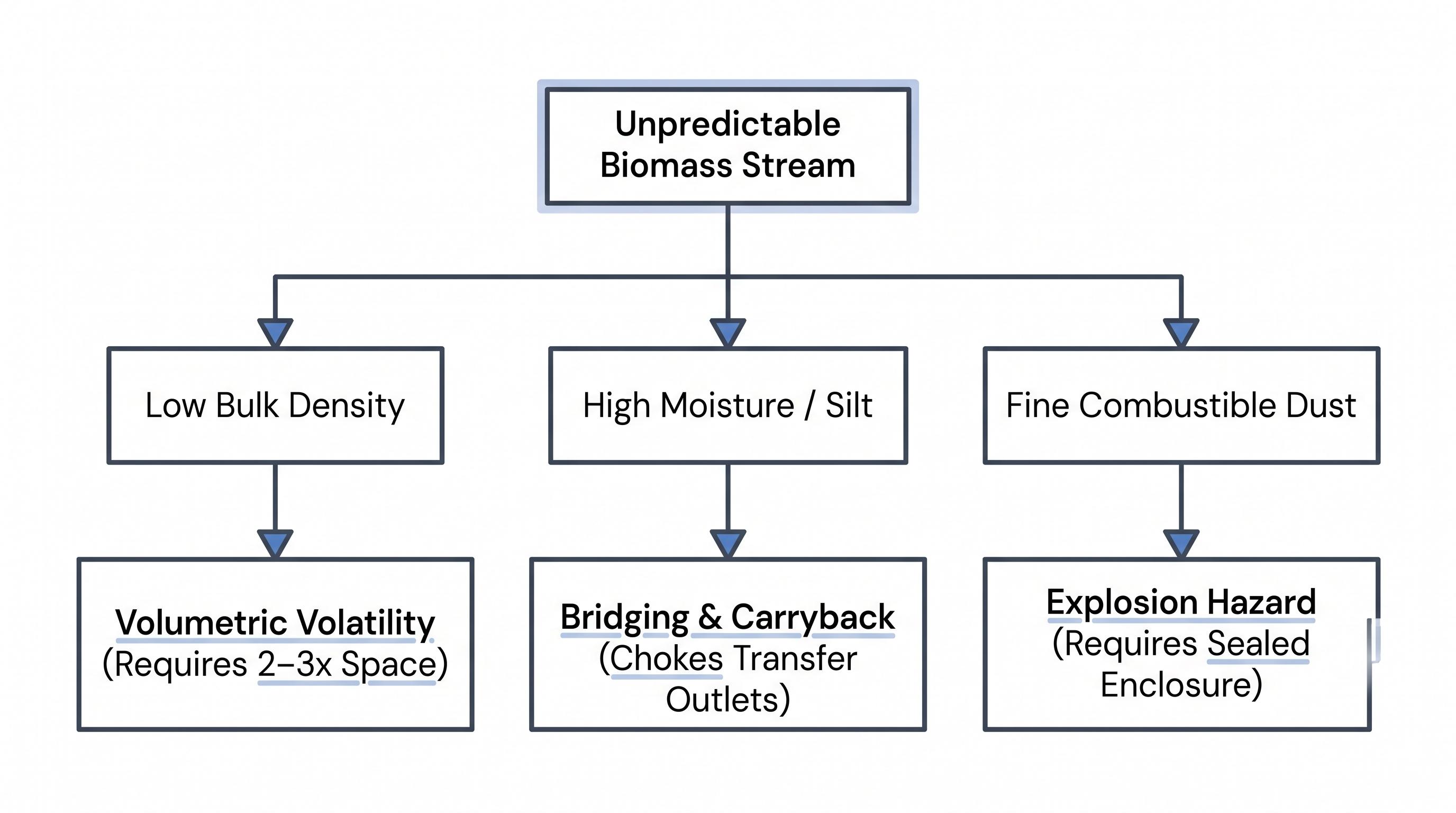
But biomass does not behave like coal. It is lighter, can hold more moisture, and can become sticky. It can also create more fine dust.
If a plant uses an old coal conveyor system for biomass without changes, it may face problems such as blocked chutes, belt carryback, material buildup, dust, and frequent maintenance.
This is why plants should design biomass handling systems for the material they carry.
Why These Problems Matter
Biomass conveyor problems often start small. A chute blocks. Material builds up. A belt starts to mistrack. Dust escapes. But when these issues keep returning, they drive up cleaning time, maintenance cost, and downtime. At that point, the better decision is usually not another temporary fix. It is a design review that identifies where the conveyor, chute, sealing, or wear protection needs correction.
5 Common Biomass Conveyor Design Mistakes
1. Using the Same Capacity as Coal
Biomass is usually lighter than coal. This means a conveyor may need to move more biomass by volume to deliver the same amount of fuel. If the conveyor is sized only for coal, it may not have enough capacity for biomass.
Simple rule: Do not size a biomass conveyor using coal data alone.
2. Not Planning for Wet and Sticky Biomass
Biomass can absorb moisture during rain, monsoon, or open-yard storage.
Wet biomass can become sticky. It may stick to the belt, build up inside chutes, or block narrow openings.
On belt conveyors, this material can also stay on the return side. This causes carryback, dirty idlers, and belt tracking problems.
So, chute and conveyor designs should consider the highest expected moisture level, not just dry biomass.
Evaluating volumetric feed rates, chute valley angles, or dust containment enclosures for a biomass co-firing project? Download this technical specification sheet for quick reference parameters.
3.Ignoring Wear and Fibrous Material
Some biomass, such as rice husk and bagasse, can contain silica. Silica can wear down metal parts over time. Biomass can also contain long or fibrous pieces that can get stuck in small gaps. These conditions can increase wear and cause blockages. Plants may therefore need stronger wear liners and conveyor parts built for the actual biomass they handle.
4. Poor Dust Control
Dry biomass can create fine dust during loading, transfer, and discharge. If plants do not seal transfer points properly, this dust can spread around the plant. Biomass dust can also create a serious fire and explosion risk under rules enforced by OSHA and other safety bodies. Plants should therefore use good sealing, enclosed transfer points, and proper dust control.
5. Using the Wrong Chain Conveyor
Biomass can pack inside a conveyor when it is wet or fibrous.
A single-chain conveyor may then face high loads and twisting forces.
A double-chain or twin-chain conveyor can spread the load across both sides and provide better support. For some biomass applications, an enclosed twin-chain conveyor can also help control dust and material loss.
If your plant is seeing repeated biomass blockages, carryback, dust leakage, or uneven flow, United Global can review the conveyor, chute, and sealing arrangement and identify the design changes needed to improve reliability.
From the field: A 600 MW thermal power plant started using 5% biomass pellets along with coal. After about three weeks, the main transfer hopper started blocking. The problem became worse during the monsoon. Wet and sticky pellets formed a blockage inside the coal chute, reduced the material reaching the conveyor, and affected fuel supply to the boiler. Wet material also built up under the return belt, and the plant had to clean about 2 tons of combustible material. The plant changed three things:
The plant redesigned the chute with a steeper angle and a low-friction UHMW-PE liner.
The plant replaced the single-chain conveyor with an enclosed double-chain conveyor.
The plant added better scrapers and dust sealing.
Result: The redesign removed the blockage problem, restored normal boiler fuel flow, and cut manual cleaning work by more than 90%.
Equipment That Can Help With Biomass
Overcoming the challenges of conveying alternative fuels and raw materials (AFR) requires choosing hardware engineered specifically for low-density, variable, and sticky streams:
Enclosed Drag Chain Conveyors: These conveyors move biomass inside a closed trough. They help control dust, spillage, and exposure to weather.
Steep Transfer Chutes: Designing transfer points with wider discharge footprints, reduced drop heights, and smooth internal flow geometry prevents dead zones and material hang-ups.
Wear-Resistant Liners: Strong liners protect the chute and conveyor from abrasive materials such as silica-rich biomass.
Twin-Chain Conveyors: Two chains share the load and help reduce twisting and chain stress
Other Equipment Used in Biomass Handling
Belt Conveyors – Move biomass over longer distances.
Conveyor Rollers and Pulleys – Support and drive the belt.
Transfer Chutes – Guide biomass from one conveyor to another.
Guillotine, Butterfly, and Knife Gate Valves – Control material flow.
Rotary Airlocks – Control material discharge while helping contain air and dust.
Screw Conveyors – Move biomass in an enclosed system.
Dampers and Diverter Valves – Control or change the material flow.
Biomass Conveyor Design Checklist
A strong biomass conveyor review should answer a few direct questions before fabrication or retrofit begins. If any of these are unclear, the line is likely carrying hidden risk.
Is the biomass moisture level known?
Is the biomass size and type known?
Can the chute handle wet and sticky material?
Will material stay centred on the belt?
Can the cleaner handle sticky carryback?
Are transfer points properly sealed?
Is there enough access for safe cleaning and maintenance?
Can the conveyor handle sudden increases in material flow?
Final Key Takeaways
Biomass is not coal. It is lighter, can be wetter and stickier, and may create more dust and wear. Plants that want reliable biomass co-firing need a system designed for the actual fuel they handle, not assumed coal conditions. United Global helps plants review chute geometry, conveyor capacity, sealing, cleaning, and wear points so retrofits solve the root cause instead of repeating the same maintenance cycle.
Frequently asked questions
Check the biomass type, moisture, size, fines, and how it flows. Then check the chute, conveyor, cleaning system, sealing, and maintenance access.
Transfer points are often missed. Poor chute design can cause blockages, spillage, dust, and belt tracking problems.
Use wider and steeper flow paths, smooth surfaces, and low-friction liners. Engineers should design the chute for the actual biomass the plant uses.
If the same area keeps having blockages, carryback, dust, mistracking, or wear, replacing parts may not solve the problem. The plant should review the conveyor design.
If the same zones keep showing dust escape, buildup, mistracking, or repeated wear, the issue often lies in the system design rather than the component itself. Repeated maintenance in the same location usually signals that engineers should review the flow conditions.