
CEMA Idler Standards Explained: Classes B, C, D, E for Indian Plant Engineers

Vijay Baid
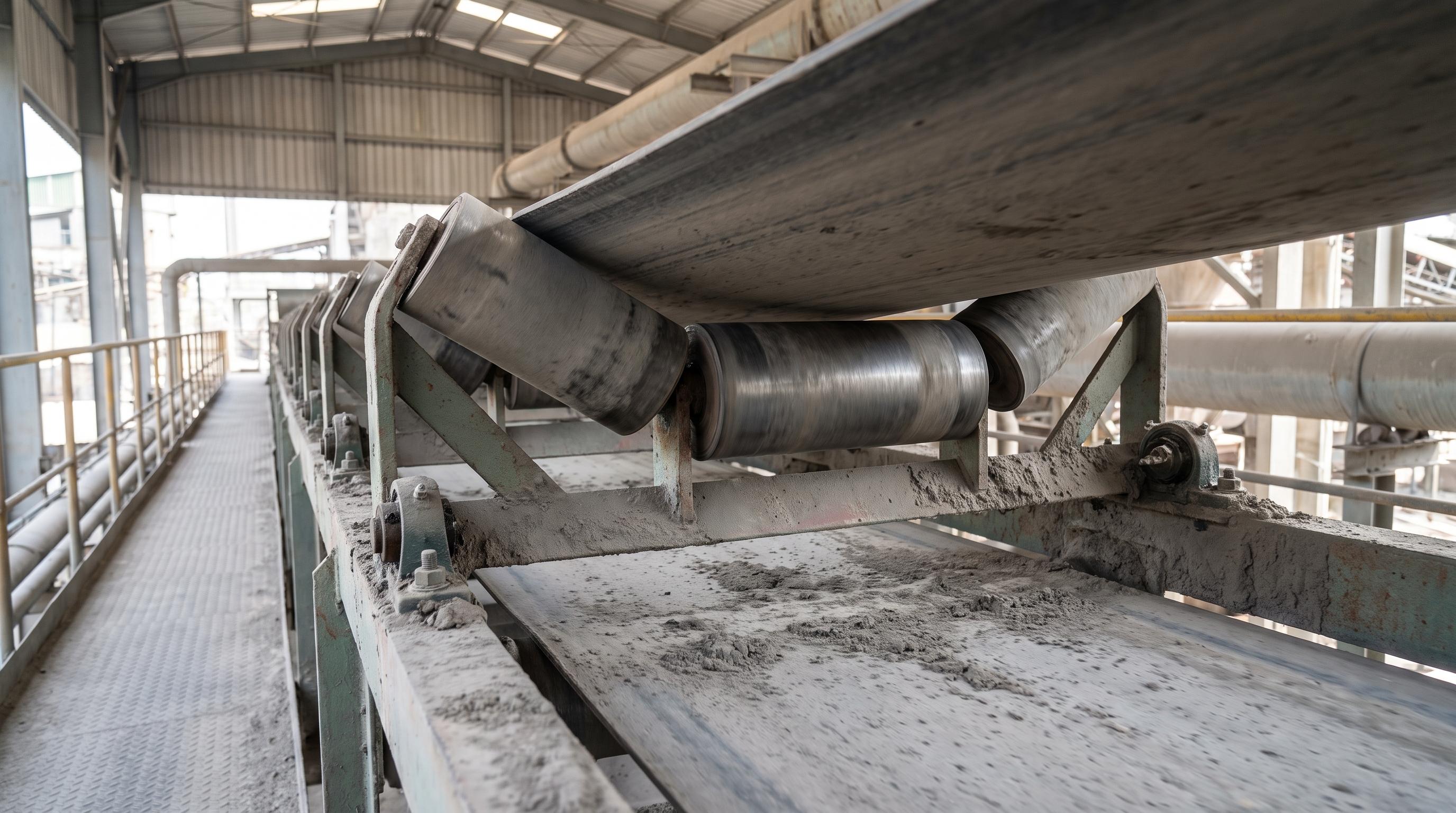
Use CEMA series to size the roller structure and duty class to estimate bearing life. For Indian plants, pair CEMA with IS 8598 Grade 1 or Grade 2 requirements so your spec is both practical and compliant.
In heavy bulk material handling, an unplanned conveyor stoppage creates an immediate operational bottleneck. When a primary conveyor drops offline at an integrated industrial plant, the financial impact ripples rapidly: upstream raw material mining halts, surge hoppers overflow, and downstream production blocks such as cement kilns, blast furnaces, or thermal power boilers are starved of essential feed.
Many engineering and procurement teams in India still describe conveyor rollers as “heavy-duty steel rollers.” That wording is too vague. It often leads to parts that match basic dimensions but fail early in continuous service. To hold conveyor uptime above 95%, teams need clear CEMA series requirements backed by Indian standards.
What Are CEMA Idler Standards and Why Do They Matter?
The Conveyor Equipment Manufacturers Association (CEMA) sets a common system for classifying conveyor idlers. Instead of relying on broad supplier claims, engineers can check defined dimensions, minimum load capacity, and sealing requirements. That makes comparison easier and selection more reliable.
For Indian heavy industries managed by operators like UltraTech, ACC, Ambuja Cement, JSW Steel, Tata Steel, and NTPC, this engineering framework provides a reliable defense against sub-optimal equipment procurement.
When mass-market procurement allows thin-walled rollers into high-tonnage bulk loops, the component failure sequence is highly predictable:
Abrasive Material Impact ⇒ Shell Wall Wear-Through ⇒ Shaft Bending ⇒ Bearing Destruction
Adhering to strict CEMA series definitions ensures the roller assembly possesses the necessary material cross-section to withstand dynamic mechanical stress.
Technical Comparison
The structural capabilities of an idler are governed directly by its CEMA series designation. The technical matrix below compares the structural dimensions for 133 mm (5.25 inch) diameter rollers the dominant configuration utilized across high-capacity Indian processing facilities:
Structural Specification | CEMA B Series | CEMA C Series | CEMA D Series | CEMA E Series |
Minimum Shell Thickness | 3.0 mm | 4.0 mm | 5.0 mm | 6.0 mm |
Minimum Shaft Diameter | 17 mm | 20 mm | 25 mm | 30 mm |
Typical Ball Bearing Type | 6204 Bore | 6304 Bore | 6305 Bore | 6306 Bore |
Maximum Radial Load Capacity | 1,800 N | 3,200 N | 5,500 N | 8,000 N |
Shaft Deflection at Max Load | ≤2.5 mm | ≤ 1.8 mm | ≤ 1.2 mm | ≤ 0.8 mm |
Target Belt Width Spectrum | 400 - 650 mm | 650 - 1,050 mm | 1,050 - 1,600 mm | 1,600 - 2,400 mm |
Primary Structural Profile | Light Industrial | Medium Duty Run | Heavy Industrial | Extra Severe Duty |
Get quick access to complete dimensional tolerances, material grade certifications, load ratings, and structural engineering cross-reference guides for CEMA and IS 8598 compliance.
How Duty Classes Determine L10 Bearing Life
While the CEMA Series dictates structural dimensions, the CEMA Duty Class governs operating longevity. Component bearing life is calculated via the standard ISO 281 fatiguing equation:
L10h = (C/P)3 . 16,667/n
Where:
L10h = Statistical operating life in hours where 90% of bearings survive
C = Basic dynamic load rating of the selected bearing (N)
P = Equivalent dynamic bearing load experienced under runtime payload (N)
n = Rotational speed of the roller shaft (RPM)
CEMA categorizes these operational constraints into five distinct levels to simplify procurement planning for long-life industrial installations:
CEMA Duty Class Breakdown
Class I (30,000 Hours Minimum L10h): Designed for light, intermittent material handling runs. Widely implemented across fly ash baghouses and dry packaging conveyor lines.
Class II (50,000 Hours Minimum L10h): Specified for general industrial loops running moderate payloads. Ideal for secondary low-tonnage coal yard operations.
Class III (75,000 Hours Minimum L10h): Engineered for continuous heavy industrial cycles. This is the baseline minimum requirement for raw limestone crushing loops and primary cement raw meal feeding lines.
Class IV (100,000 Hours Minimum L10h): Formulated for severe duty, high-load environments running 24/7. Applied extensively across iron ore handling systems, sinter plant feeds, and primary steel mill scale conveyors.
Class V (150,000 Hours Minimum L10h): Reserved for extreme high-capacity runs and overland long-haul applications where component failure creates significant repair friction.
Abrasive Environment Warning: Standard bearing life calculations assume a clean site. Many Indian plants run in high heat and heavy dust, so bearings do not last as long as the base calculation suggests. When summer temperatures rise above 45°C and clinker or ore dust is constant, engineers should apply a contamination reduction factor (en ≤ 0.6) before finalizing the duty class.
Mapping CEMA to Bureau of Indian Standards (IS 8598)
For Indian statutory documentation and strict public-sector tendering compliance, engineering specifications must align with IS 8598 (Indian Standard Specification for Idler Rollers for Belt Conveyors). Because IS 8598 utilizes a separate engineering designation matrix, procurement teams should understand how these two systems correspond:
1. Structural Cross-Reference
IS 8598 Grade 3 (Light Duty): Maps closely to the structural dimensions of CEMA B. Best applied to light bagging, warehousing, and clean primary grain loops.
IS 8598 Grade 2 (Medium Duty): Equates to the capabilities of CEMA C or light CEMA D, depending on the specified internal bearing configuration. This is the baseline standard for mid-sized coal blending and limestone storage yards.
IS 8598 Grade 1 (Heavy Duty): Aligns directly with the heavy-walled construction criteria of CEMA D and CEMA E. Mandatory for primary stone crushers, blast furnace inputs, and high-capacity main feed lines.
2. Resolving Engineering Document Conflicts
To avoid technical gray areas during procurement, engineers should combine both frameworks within their project specifications. A precise, dual-compliant procurement callout should read as follows:
Supply troughing idler assemblies featuring a 133 mm roll diameter and 500 mm effective length, constructed to strict CEMA D Series dimensions with a Class IV Duty rating (minimum 100,000-hour L10 fatigue life), while ensuring complete material and manufacturing compliance with IS 8598 Grade 1 structural certifications.
Critical Pitfalls in Indian Idler Procurement
Without clear CEMA and IS benchmarks stated in tender specifications, supplier quotes often favor under-specified hardware to reduce initial fabrication costs. Watch for these common structural adjustments:
Shell Wall Reduction: Substituting a thin 3.5 mm shell on an application requiring a CEMA D minimum 5.0 mm wall. This reduces weight and raw material cost but accelerates structural failure in highly abrasive clinker loops.
Bearing Substitutions: Utilizing light-duty 6205 bearings in place of the heavy-capacity 6305 series. This change drops the dynamic load capacity by more than 30%, causing early bearing failure under heavy surge loads.
Shaft Undersizing: Shrinking the internal shaft diameter down to 20 mm instead of the required CEMA D 25 mm specification. This reduction exponentially increases shaft deflection, leading to severe belt tracking errors.
Seal Degradation: Substituting simple single-lip contact seals for high-durability, grease-purged multi-stage labyrinth seals. Without a multi-stage labyrinth barrier, fine dust quickly contaminates the bearing chamber, grinding down rolling parts and leading to early component seizures.
Whether you need a full audit of your existing conveyor loops, assistance drafting dual-compliant CEMA/IS tender specifications, or custom roller solutions for harsh operating environments, our technical team is here to help.
From the Field: A high-output cement facility was plagued by constant structural breakdowns along its primary limestone reclaim conveyor loop. The 1,200 mm wide belt operated at 3.5 m/s, moving raw stone from the primary crusher discharge. The procurement specification had only requested generic "heavy-duty 133 mm steel rollers."
The original supplier delivered rollers with a 3.5 mm shell and 20 mm shafts. After eighteen months of continuous service, the impact from limestone bent the shafts. That misaligned the bearings and caused them to seize. Once the rollers froze, the moving belt dragged across the steel surface and cut deep grooves into the bottom cover.
We resolved the root problem by replacing the failed assemblies with heavy-walled CEMA D Series rollers built with 5 mm steel shells and solid 25 mm shafts, certified to IS 8598 Grade 1 standards. The upgraded units featured premium triple-labyrinth seals and heavy-duty 6305 bearings rated for Class IV duty. This retrofit completely eliminated shaft deflection, stopped dust contamination, and the conveyor line has now operated for over three years without a single unscheduled stoppage.
Final Takeaway
Achieving high-efficiency bulk material handling requires moving away from generic component descriptions and adopting strict CEMA engineering standards. Specifying correct CEMA series footprints ensures your conveyor frameworks possess the physical wall thickness and shaft stiffness needed to handle heavy loads, while selecting the right duty class ensures predictable service life under harsh operating conditions.
Idler selection should match the rest of the material-handling line. That includes upstream and downstream equipment such as belt conveyors, screw conveyors, flow control gates, and diverter valves. When these components are specified as one system, plants reduce unplanned shutdowns and keep material moving safely. Engineers can also check published safety guidance from OSHA and compare dimensional references with CEMA source material.
Frequently Asked Questions (FAQ)
The CEMA Series (B, C, D, E) governs the physical dimensions of the idler, defining structural parameters like shell thickness, shaft diameter, and bearing bore size. The CEMA Duty Class (I-V) specifies the required statistical L10 bearing operating life in hours under rated radial forces. Series defines structural strength; Duty Class defines wear life.
CEMA D rollers require a minimum 5 mm thick steel shell (compared to 3–4 mm on generic rollers), larger 25 mm shafts, heavy-capacity 6305 bearings, and multi-stage labyrinth seals. This robust construction increases raw material and machining costs, but delivers a much longer service life that significantly lowers your long-term operating costs.
No. While a CEMA C roller might appear to have enough bearing capacity on paper, its thinner 4 mm shell and smaller 20 mm shaft will experience excessive deflection under heavy loads and material impacts. This deflection leads to early bearing failure and belt tracking issues. High-tonnage primary lines require CEMA D or E specifications.
Return idlers handle the empty side of the conveyor, but they are still subject to significant belt tension and wear from material carryback. On long-haul or high-lift conveyor lines, return idler loading can reach up to 50% of the carry-side tension. In these critical applications, return idlers should match the CEMA series of the carrying rollers to ensure uniform system reliability.
High operating temperatures accelerate grease breakdown and lower the viscosity of bearing lubricants. In regions where summer temperatures exceed 45°C, engineers must adjust their ISO 281 bearing calculations by applying environmental reduction factors. This ensures the selected bearing series can maintain its target L10 operating life despite the extra heat stress.