
Conveyor Systems
Conveyor Design for Extreme Weather: Outdoor Engineering Guide

Vijay Baid
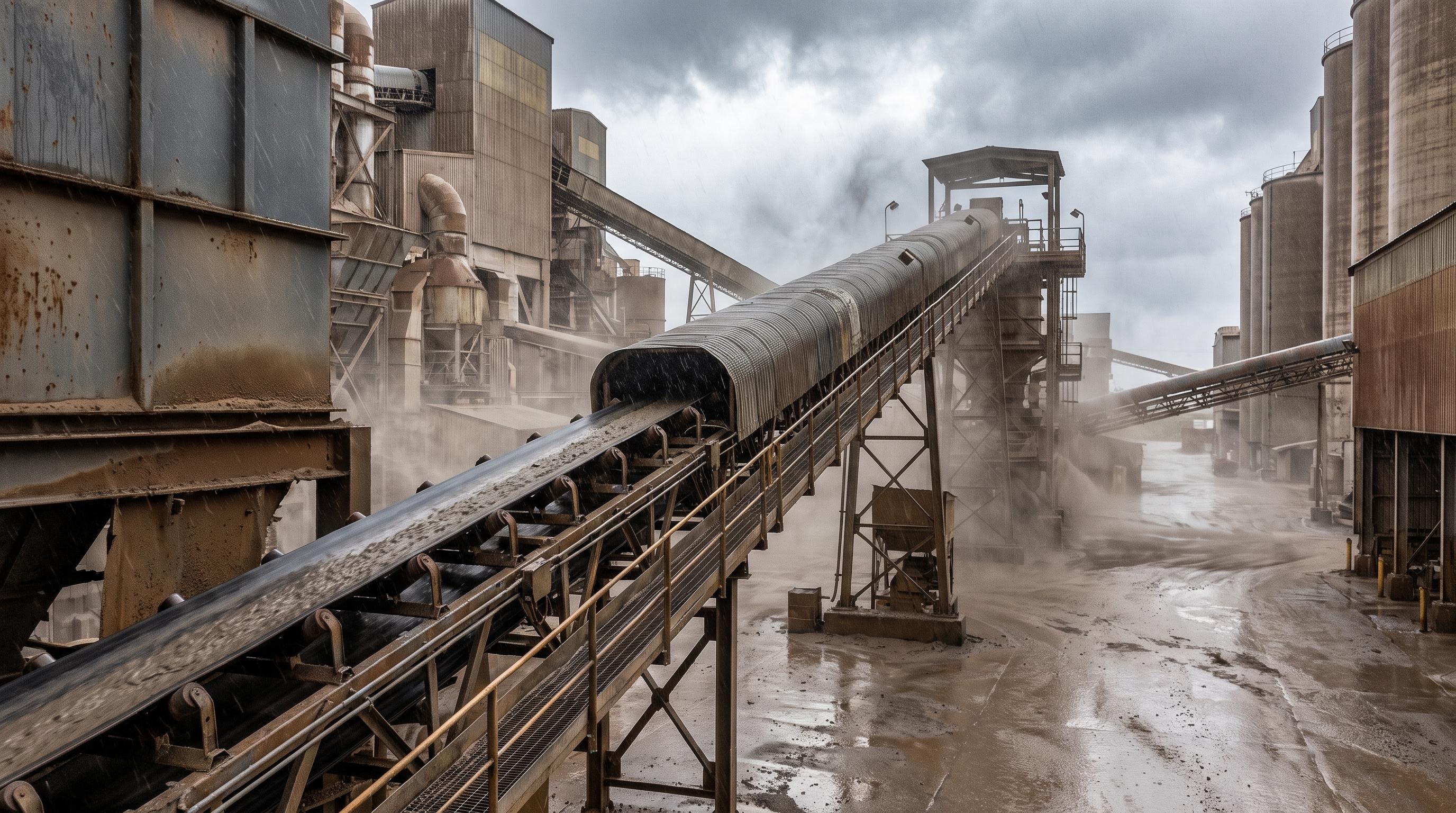
Outdoor conveyors must work in very hot, very cold, wet, and windy weather. Standard indoor conveyors often fail outside because belts can crack, metal parts can bend, lubricants can freeze, and wet material can stick inside chutes. To make a conveyor last in tough weather, you need belt materials that can handle temperature changes, such as stainless steel or special EPDM rubber. You also need ceramic pulley lagging for better grip in wet conditions, a frame that can expand and contract safely, and sealed drive parts to keep out water and dust.
Does your outdoor conveyor work well during normal weather but start causing problems when the temperature drops, the rain gets heavy, or the summer heat becomes extreme?
Maybe the belt starts slipping on cold mornings. Maybe the belt begins to mistrack after heavy rain. In very hot weather, you may notice belt damage, unusual movement in the conveyor structure, or more frequent bearing problems. Strong winds can also blow material away, while dust and moisture can damage moving parts over time. These problems can be easy to blame on worn-out parts. But in many cases, the weather is part of the problem.
Outdoor conveyors face problems that indoor conveyors do not. They must work through extreme cold, heat, rain, wind, sunlight, and dust all year. If the conveyor is not built for these conditions, even good parts can fail sooner than expected. This can lead to more maintenance, sudden stoppages, material spillage, belt damage, and higher costs.
So before you replace another belt, roller, bearing, or pulley, ask this: Is the conveyor really designed for the weather at your site?
In this guide, we explain the main weather risks for outdoor conveyors and the design changes that can help them run better in extreme conditions.
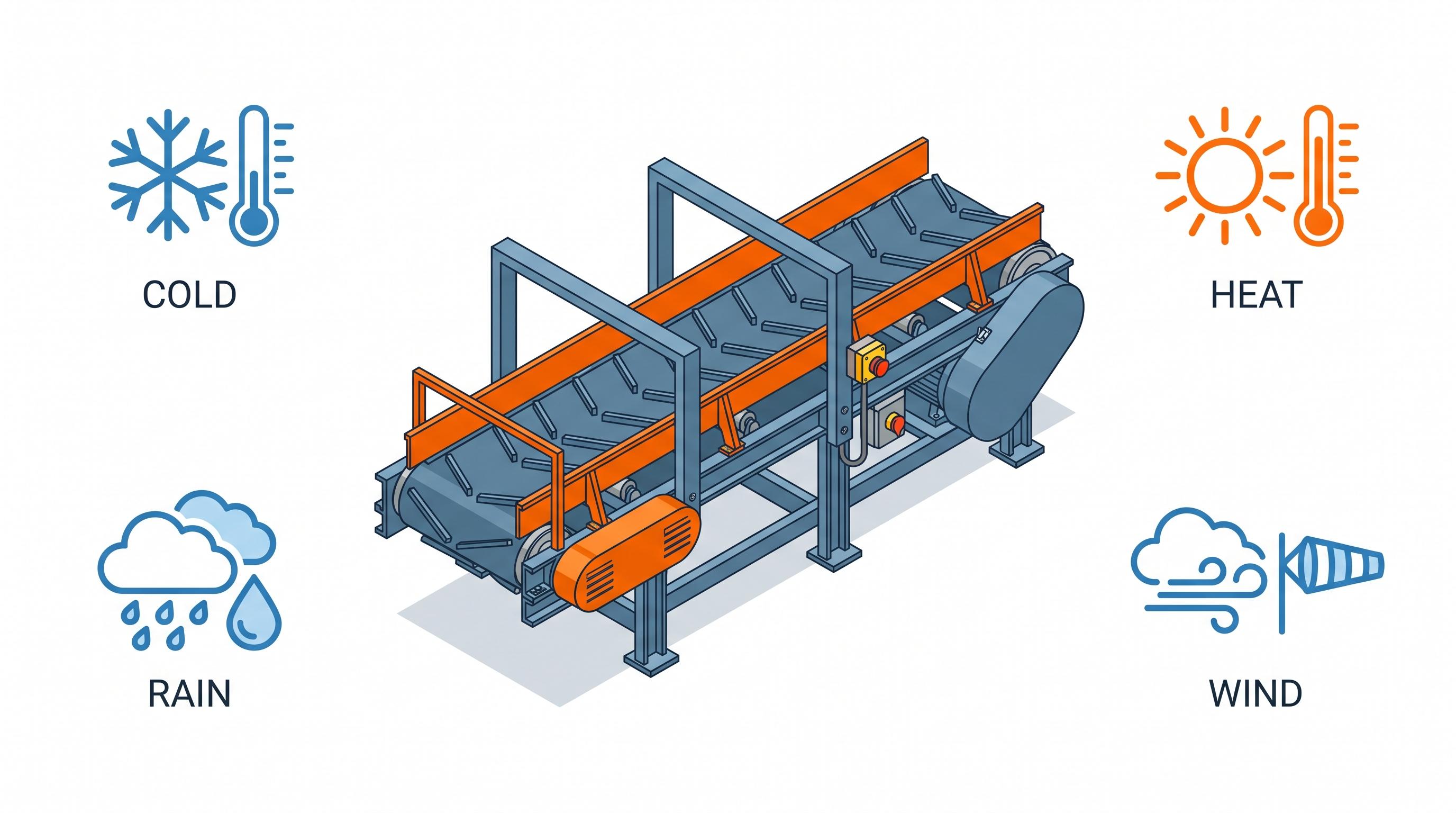
1. Designing for Extreme Cold Weather (Below Freezing)
When temperatures fall below 0°F (-18°C) or reach -40°F (-40°C), standard rubber belts can become hard and brittle. The belt may lose flexibility, crack under load, or even break.
Cold Weather Design Item | Purpose |
|---|---|
Low-temperature rubber or stainless steel belts | Keep the belt flexible and reliable in very cold weather |
Ceramic-lagged pulleys | Maintain belt grip and reduce slipping caused by ice |
UHMW-PE chute liners | Help wet material slide instead of freezing to the chute walls |
Roller beds instead of slider beds | Keep a frozen belt from sticking to the conveyor frame |
Low-temperature synthetic oil and sealed bearings | Keep drives and bearings working in freezing conditions |
Choose Belts That Can Handle Freezing Temperatures
Standard neoprene and rubber belts can become hard when temperatures drop. For very cold conditions, use low-temperature rubber compounds or polymer belts that are rated for sub-zero temperatures.
For food processing and freezing facilities, solid stainless steel belts can also be used. They can remain strong and flexible in deep-freeze conditions down to -25°F without cracking.
Prevent Belt Slip on Icy Pulleys
Ice and moisture can make drive pulleys slippery. This can cause the belt to lose grip during startup or operation.
Large-diameter head pulleys with ceramic or vulcanized diamond lagging can provide better grip between the pulley and belt. This helps reduce belt slip in icy conditions.
Keep Chutes and Drives Moving
Use Anti-Freezing Chute Liners: Wet aggregate, coal, or ore can freeze against metal chute walls. UHMW-PE or PTFE liners provide a smoother surface and help reduce frozen buildup.
Use Roller Beds Instead of Slider Beds: A frozen belt can stick to a slider bed and make startup difficult. Roller beds support the belt while allowing it to move more freely.
Use Cold-Weather Lubricants: Standard grease can become thick in freezing temperatures. Low-temperature synthetic oils can help gearboxes and sealed bearings keep moving reliably.
2. Designing for Extreme High-Temperature Applications
Extreme heat can come from hot materials such as clinker, metal parts, or cooked food. Direct sunlight can also heat outdoor conveyor equipment.
High temperatures can damage standard rubber belts. They may become soft, crack, or release harmful gases. Heat can also make steel conveyor frames expand and move out of alignment.
High-Heat Design Item | Purpose |
|---|---|
Stainless steel (Alloy 17-7 / Inconel) or silicone belts | Handle hot materials and high temperatures without cracking, melting, or losing shape |
Expansion joints and slotted holes in support frames | Allow the frame to expand and contract safely and help prevent belt mistracking |
High-temperature synthetic polyurea grease and ceramic bearings | Protect bearings and other rotating parts during continuous high heat |
Ventilated, shaded, or IP65 motor enclosures | Protect motors and controls from heat, dust, and outdoor exposure |
Choose the Right Belt for High Temperatures
Standard rubber belts can start to fail above 200°F (93°C).
For high-temperature applications, use belt materials such as EPDM, silicone, or PTFE, depending on the operating conditions.
For very hot materials such as clinker in cement plants or products coming from industrial ovens, solid stainless steel belts such as Alloy 17-7 or Inconel can handle temperatures above 700°F (371°C) without melting or losing their shape. For a broader breakdown of belt conveyor components and selection basics, see What Is a Belt Conveyor? Parts, Types, and How It Works.
Allow the Conveyor Frame to Expand
Metal expands when it gets hot and contracts when it cools.
This becomes important on long outdoor conveyors. If the steel frame cannot move naturally, it can bend or shift. This can affect belt alignment and cause serious mistracking.
To prevent this, conveyor frames can use:
Expansion joints
Sliding rails
Slotted bolt holes
These features give the steel room to expand and contract without putting extra stress on the conveyor.
Correct roller selection is also important for proper belt support and tracking. The same tracking and support logic also depends on correct roller choice, which is covered in Carrying Idlers vs Return Idlers vs Impact Idlers: A Plant Engineer's Comparison Guide.
Protect Motors and Bearings From Heat
Grease: Use high-temperature, polyurea-based synthetic grease that can handle continuous heat without breaking down quickly. For a practical reference on choosing lubricants by temperature, speed, and load, see SKF’s grease selection guidance.
Motors: Keep drive motors in shaded and well-ventilated housings. Use IP65-rated enclosures to protect electrical controls from direct sunlight, dust, and heat buildup.
This keeps the motors, bearings, and controls working more reliably in high-temperature conditions.
Choosing the right drive power, belt width, and heat tolerances can be tough. Check our full technical documentation to match your plant's exact capacity requirements.
3. Protecting Outdoor Conveyors from Rain, Wind, and UV
Outdoor conveyors face more than just hot and cold weather. Rain, strong wind, sunlight, and dust can also affect conveyor performance and part life.
Outdoor Factor | What Can Go Wrong | Recommended Fix |
|---|---|---|
Heavy Rain | Belt slipping, chute blockage, and rust on the frame | Covered galleries, ceramic lagging, and stainless steel fasteners |
Strong Wind | Material blowing away and belt lifting from the idlers | Curved hood covers, enclosed transfer chutes, and side windbreaks |
Direct Sunlight (UV) | Belt surface drying and rubber cracking | UV-resistant belt covers and shaded conveyor galleries |
Dust & Dirt | Bearings getting stuck and faster roller wear | Labyrinth-sealed bearings and dual carbide scrapers |
Protect the Conveyor From Heavy Rain
Heavy rain can make the belt wet and reduce its grip on the pulley. Water can also make wet material stick inside chutes and cause blockages.
Long-term water exposure can also cause the conveyor frame and fasteners to rust.
Covered galleries, ceramic pulley lagging, and stainless steel fasteners can help protect the conveyor from these problems.
Protect the Conveyor From Strong Wind
Strong wind can blow light material away from the conveyor. On exposed conveyors, very strong wind can also lift the belt away from the idlers. Curved hood covers, enclosed transfer chutes, and side windbreaks can help protect both the material and the belt.
Protect Belts From Direct Sunlight
Long-term exposure to direct sunlight can damage rubber belts. UV rays can dry the belt surface and cause cracks over time. Using UV-resistant belt covers and placing exposed conveyor sections under shaded galleries can help extend belt life.
Control Dust and Dirt
Dust and dirt can enter bearings and moving parts. This can make bearings harder to turn and increase roller wear. Labyrinth-sealed bearings help keep dust away from the bearing. Dual carbide scrapers help remove material from the belt and reduce buildup.
Match the Design to the Site
The right protection depends on where the conveyor is installed. A dusty quarry, coastal port, or open mining site may need different levels of sealing, drainage, corrosion protection, and wind control.
The key is to design these features for the real conditions at the site, not use the same outdoor conveyor design everywhere.
If belt slip, mistracking, spillage, or repeat maintenance problems keep coming back, the next step is a design review based on the real site conditions. Our engineering team can help find the changes needed to improve reliability, sealing, safety, and long-term performance.
Field experience: At a northern bulk mining site, the belt kept slipping on cold mornings during a winter overhaul. The cause was freezing between the pulley face and the bottom of the belt. The fix was not a bigger drive. It was better weather-ready design: diamond-grooved ceramic lagging for wet grip and low-viscosity synthetic grease for reliable cold starts. After those weather-specific changes were made, the startup failures stopped.
These three field rules keep outdoor conveyor design focused on the real problem: building a system that stays aligned, easy to maintain, and reliable when weather conditions work against it.
Final Key Takeaways
Choose Materials for the Weather: Use low-temperature rubber or stainless steel belts for extreme cold. Use heat-resistant EPDM or alloy steel for high temperatures.
Give the Frame Room to Move: Long outdoor conveyors need expansion joints so the steel frame can safely expand and contract with temperature changes.
Keep the Belt Moving: Use ceramic pulley lagging and cold-weather synthetic lubricants to improve belt grip and help prevent startup problems in freezing conditions.
Protect Transfer Points: Use plastic chute liners and enclosed covers to help wet material move smoothly and reduce blockages.
Make Maintenance Safe: Provide non-slip walkways and sheltered service areas so technicians can safely inspect and maintain the conveyor in different weather conditions.
Frequently Asked Questions (FAQ)
The biggest mistake is treating weather like a small issue instead of a main part of the design. Wind, rain, dust, heat, and corrosion all affect belt alignment, sealing, drive grip, access, and part life across the whole system.
You protect it with a mix of covers, drainage, sealed transfer points, stable skirt sealing, the right cleaners, and protected moving parts. Covers alone will not fix the problem if loading and sealing are not stable.
Often, yes. Outdoor use may need belt covers that can handle UV, heat, moisture, or abrasion, plus idlers and bearings with better sealing against dust and water.
Transfer points deal with changing material flow, belt loading, sealing, and exposure to wind or water. When any of these change, spillage and dust can rise fast unless the chute and support zone were designed for those conditions.
If the same problems keep coming back after normal maintenance, the real issue is usually the design, not the wear parts. Repeated spillage, mistracking, carryback, corrosion damage, or unsafe access are strong signs that the conveyor needs engineering changes, not another short-term repair.