
Flow Control Gate vs Slide Gate: When You Need Metering Instead of Shut-Off

Vijay Baid
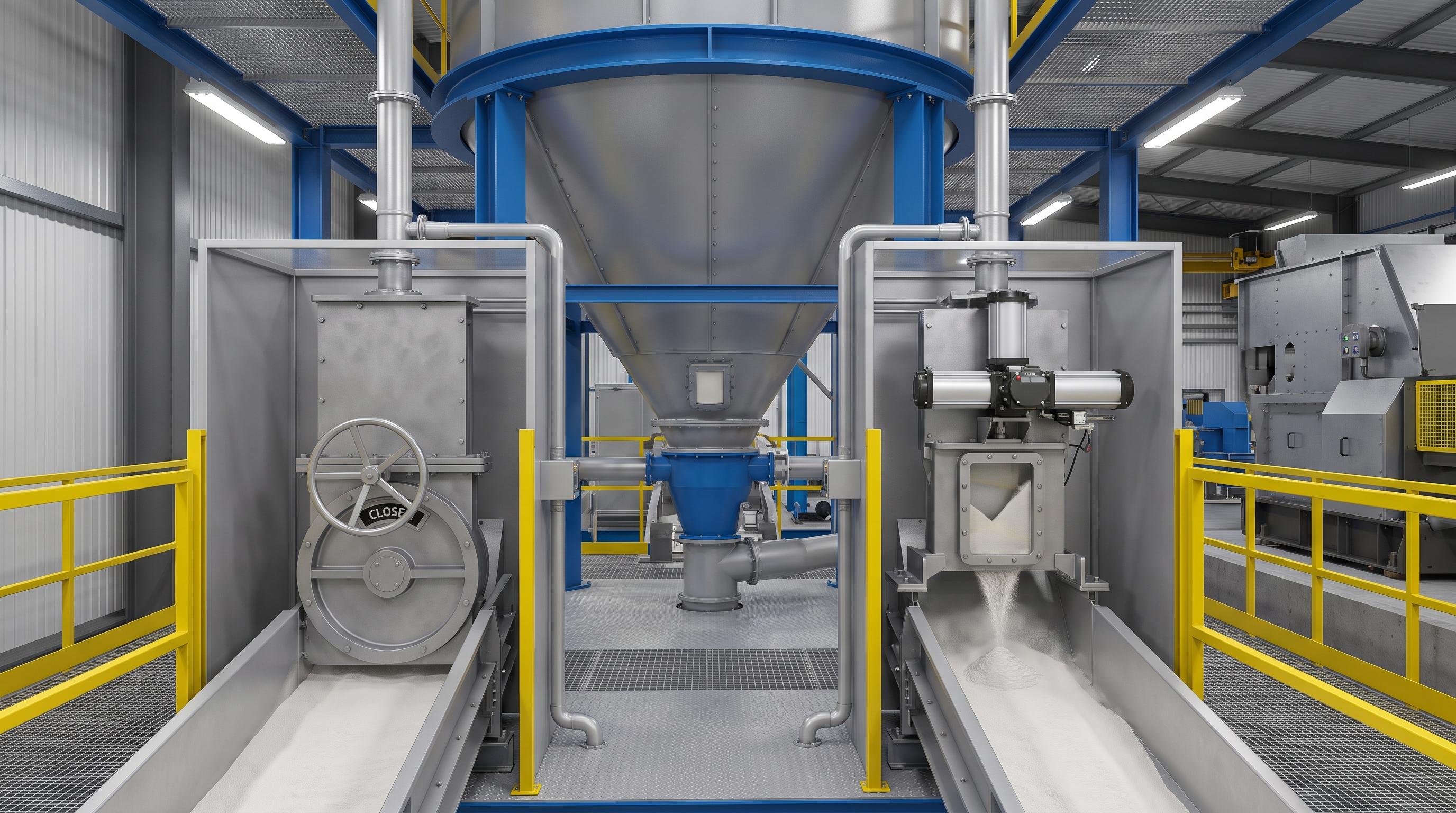
A slide gate uses a flat blade to fully open or shut off material flow. That makes it ideal for binary isolation above maintenance points. A flow control gate uses a curved, dynamic blade assembly. It throttles, meters, or modulates the material stream by variable percentages. Problems start when a standard slide gate is forced into metering duty. Material packs into the guide rails. The blade deflects. The actuator fails quickly.
In dry bulk handling plants, the choice between a flow control gate and a standard slide gate has major process consequences. The right choice supports smooth material flow. The wrong one leads to jammed lines, overloaded feeders, and repeated downstream process errors. Both assemblies sit at silo, hopper, or chute outlets. But they are built for very different duties.
Using the wrong gate causes rapid wear and poor process control. This guide breaks down the mechanical differences. It will help you match the gate to the job in a gravity-fed system.
Technical Comparison
Design Feature | Standard Slide Gate | High-Performance Flow Control Gate |
Primary Function | Maintenance Isolation (On/Off) | Continuous Volumetric Metering |
Blade Geometry | Flat, square-edged rectangular blade | V-notched, curved, or multi-needle profile |
Actuation Profile | Manual handwheel or two-position pneumatic | Modulating electric or positioning pneumatic cylinder |
Sealing System | Standard compression packing | Adjustable perimeter packing with heavy-duty UHMW-PE seals |
Wear Resistance | Standard structural frame rails | Hardened, field-replaceable liner wear plates |
The Core Functional Breakdown
To prevent line failures, first decide what the process point actually needs. Some junctions need full shut-off. Others need continuous flow adjustment. That decision should drive the gate selection.
At the Silo/Hopper Outlet.. | Choose |
|---|---|
Maintenance shut-off only? | Slide Gate |
Continuous/constant feeding? | Flow Control Gate |
1. The Slide Gate: Engineered for Isolation
A standard slide gate, often called a knife gate, uses a flat rectangular blade. It is usually moved by a handwheel or a basic pneumatic cylinder.
Primary Duty: Zero-leakage static shut-off.
Operating Profile: It stays fully open during normal operations. It closes fully only when downstream equipment, such as a feeder or crusher, needs maintenance.
The Risk of Misuse: Problems begin when a standard slide gate is left partly open to control flow. That creates a severe restriction point. Abrasive bulk solids then erode the blade edge quickly. The packing seals fail. Material leakage follows.
2. The Flow Control Gate: Engineered for Metering
A flow control gate, such as a needle gate or V-orifice gate, is designed to run partly open. It can regulate material flow even under heavy live load.
Primary Duty: Continuous, precise volumetric flow regulation.
Operating Profile: It adjusts blade position in real time. That adjustment is driven by feedback from downstream weigh belts, load cells, or loss-in-weight feeders.
The Engineering Advantage: The internal geometry often uses a V-notch or curved aperture. This keeps the material stream centered while flow is restricted. It reduces localized wear on the frame. It also produces a steadier and more predictable discharge stream.
Selection Factors
Before selecting a gate, consider these questions:
What is the gate's primary purpose? Isolation or continuous flow control?
What type of material are you handling? Fine powders, coarse aggregates, or abrasive solids?
Does the process require accurate feeding or batching?
Will the gate be operated manually or by a PLC?
How often will the gate cycle during production?
What level of wear and maintenance is acceptable?
Choosing a gate based on these factors helps improve reliability and reduces unplanned downtime.
If your application requires steady material discharge, the next step is to compare blade geometry, seal design, and actuator control against your actual operating conditions. A detailed spec sheet helps you confirm whether the gate is built for simple isolation or true metering duty before you finalize the selection.
System Spec Check: Balancing Material and Gate Dynamics
Before finalizing the gate arrangement, review the main operating limits. These conditions will strongly affect gate performance and service life.
Fluidized and Aerated Material Loops
Highly fluid powders such as cement or fly ash can leak past standard flat gates. If the system handles aerated material upstream of a distribution point, use an adjustable flow control valve with resilient polymer seals. For related fluidizing air loops, make sure the gate works with your Dampers layout. That helps maintain stable line pressure.
Particle Abrasiveness and Jam Risk
Coarse and abrasive materials, such as clinker or aggregates, can lodge in the side tracks of a standard slide gate. This happens when the blade is held partly open. The result is track scoring and actuator binding. A flow control gate reduces this risk. Its seals and pivot bearings sit outside the main gravity drop channel. That protects the hardware from direct wear.
Regulatory Note: When managing heavy dust or hazardous bulk materials, plant operators should ensure maintenance safety plans align with OSHA personal protection mandates and emissions control standards regulated by the EPA.
Common Selection Mistakes
Avoid these common mistakes when selecting a material gate:
Using a slide gate for continuous flow control.
Selecting a gate based only on purchase price.
Ignoring material abrasiveness or moisture.
Undersizing the actuator for the material load.
Skipping routine seal and actuator maintenance.
These issues often lead to leakage, excessive wear, and unexpected downtime.
Are your material gates jamming, leaking, or causing unstable material flow? Our engineers can help you select the right gate for reliable performance.
Field Experience: During a recent audit at a dry-mix mortar plant, we found the crew replacing the pneumatic cylinder on a standard slide gate every three weeks. The plant was using that gate for feed control into a packing machine. It was being held partly open for a duty it was never designed to handle.
Abrasive sand wore the blade edge into a jagged profile. Uneven pressure pushed the blade sideways in the guides. That twist damaged the cylinder rod. We replaced the valve with a dedicated V-orifice flow control gate. The failures stopped. The plant then ran reliably for more than two years.
Final Takeaway
Good dry bulk performance depends on matching valve action to material behavior. Use a slide gate when you need full isolation above a maintenance point. Use a flow control gate when you need active trimming, controlled modulation, or batch weight control.
When dosing equipment works in step with the rest of the dry bulk layout, downstream Belt Conveyors stay better protected. That reduces off-center loading, tracking problems, and material spillage at transfer points.
Frequently Asked Questions (FAQ)
Usually, no. Position sensors can show blade position, but they do not change how a standard slide gate is built. The flat blade still wears unevenly, seals can fail, and material can bind during throttling.
Use an infinitely modulating electric actuator or a pneumatic cylinder with a digital positioner. These options let the PLC adjust the opening in controlled steps. The final position should follow live feedback from the downstream process.
High-moisture materials need a gate that can resist sticking and cut through packed solids. A flow control gate with 304 or 316 stainless steel liners helps reduce buildup caused by rust-pitting. A high-torque actuator also helps the blade move through compacted wedges more reliably.
Flow control gates need routine checks on packing seals and actuator calibration. Seals should be adjusted or replaced on schedule to limit powder migration into the tracking rails. Regular inspection also helps reduce leakage and wear around the work area.