
Conveyor Systems
Why Smart Conveyors Are the Future of Industrial Efficiency

Vijay Baid
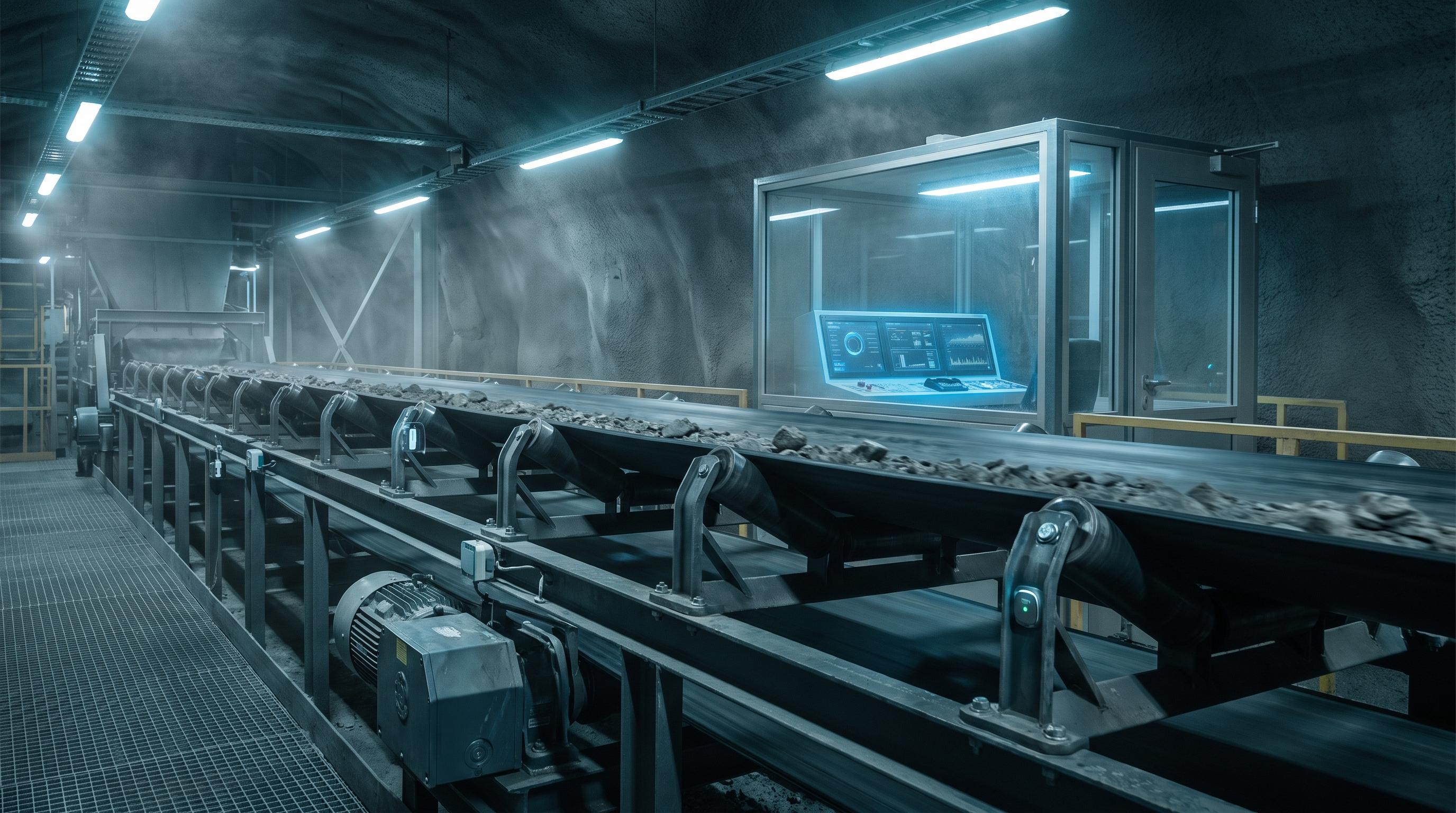
Smart conveyors improve efficiency because they warn plants about trouble before it turns into downtime, cleanup, or damage. They help maintenance teams plan work earlier, keep material flow steadier, and make inspections more focused. They work best when smart monitoring is paired with solid conveyor engineering.
Smart conveyors help plants spot problems early. They show changes in load, belt tracking, drive condition, bearing heat, and material flow before those issues stop production. That gives plant teams time to plan repairs and keep the line running.
That matters in cement plants, mines, steel units, and bulk material sites. These plants cannot wait for a belt, idler, or drive issue to grow into a shutdown. Smart conveyors help teams protect throughput, plan maintenance earlier, cut emergency work, and run with more control.
What makes a conveyor “smart” in a real plant?
A smart conveyor combines sound mechanical design with clear condition visibility. In simple terms, it uses sensors, controls, and monitoring logic to track what matters most while the line is running instead of depending only on manual checks from time to time.
The most useful smart conveyor systems usually track a mix of:
Belt speed and slip to catch drive or traction issues early
Load and material flow to prevent overloading, unstable feed, and poor transfer performance
Drive, motor, and gearbox condition to spot unusual vibration, heat, or power draw
Idler and bearing health to catch failures before they lead to belt damage
Tracking behavior to reduce mistracking, edge damage, and repeat cleanup
Transfer-point performance where dust, spillage, and impact wear often begin
That is why smart conveyors work best alongside good conveyor engineering. Monitoring helps most when it supports better chute design, belt support, sealing, and troubleshooting. It cannot replace them. CEMA’s ANSI standards overview makes the same point: conveyor performance depends on sound engineering and the right application standards, not just more instruments.
Why heavy industries are investing in smart conveyors now
Heavy industries are moving toward smarter conveyor systems because the cost of waiting for failure keeps rising. Plants need better output, less waste, lower maintenance cost, and safer operation, often with tighter shutdown windows than before.
Plant pressure | What older conveyor management misses | What smart conveyors improve |
|---|---|---|
Higher throughput targets | Hidden instability until output drops | Earlier warning on load, speed, and transfer issues |
Tighter maintenance windows | Too many faults found only during shutdown | Better planning before shutdown starts |
Safety expectations | Manual checks in dusty or hazardous areas | More remote visibility and fewer surprise callouts |
Cost pressure | Repeat cleanup, belt damage, and emergency repairs | Less secondary damage and better timing for repairs |
Older plant infrastructure | Very little visibility on aging conveyors | A practical retrofit path on the highest-risk lines first |
How smart conveyors improve industrial efficiency
Smart conveyors improve industrial efficiency by protecting four things every heavy-industry plant depends on: uptime, maintenance planning, material flow, and safety.
1. They reduce unplanned downtime
Unplanned downtime is costly because one conveyor issue can stop a full line upstream or downstream. When a plant sees unusual heat, vibration, slip, mistracking, or uneven load early, the team has more time to act before a small issue grows into a shutdown.
This matters most on key conveying routes in cement plants, mines, stockyards, and process industries, where the conveyor is not just a utility. It is a production asset.
2. They improve maintenance planning
Smart conveyors help maintenance teams move away from blanket replacement and last-minute response. They can focus first on the parts that are actually changing. In many shutdown reviews, the same pattern appears: a hot idler, drifting belt, or unstable load had already been warning the team before the stoppage. That early warning helps plants define shutdown scope better, plan spares with more confidence, and cut overtime caused by surprise failures.
In shutdown work, repeat skirting replacement often points to a wider transfer-point problem, not just a skirting problem. Once the chute is opened, the same issues often appear together: off-centre loading, unstable feed, local wear, and fines building up below the transfer. Better condition visibility helps the team see that pattern earlier and plan the fix before the next shutdown turns into the same repair again.
That creates three practical gains:
clearer shutdown scope
better spare-parts planning
less overtime caused by surprise failures
3. They help plants keep material flow stable
Smart conveyors help plants keep material flow stable by showing when a conveyor starts feeding unevenly into the next process. That gives the team time to act before unstable loading turns into surge feeding, chute build-up, downstream starvation, or repeat process upset.
This matters even more where dust, spillage, or poor discharge control is already visible. In those cases, unstable flow often points to a transfer-point issue, not just a monitoring gap. That is why plants should also review how transfer-point control affects dust and spillage before choosing the right fix.
4. They support safer operation
Long conveyors, elevated structures, dusty galleries, and high-load transfer zones are poor places for reactive inspection. Smart conveyors reduce unnecessary exposure by showing unusual behavior earlier and helping teams inspect with a clear purpose. That safety case should stay close to established guidance such as ASME B20.1, which supports disciplined inspection, maintenance, and operation around conveyor systems.
That does not replace field inspection. It makes field inspection smarter, faster, and more targeted.
Which conveyor problems smart monitoring can catch early
The value of a smart conveyor becomes much clearer when the plant links monitoring to real failure modes instead of broad digital language.
Problem | Early sign | Why it matters |
|---|---|---|
Mistracking | Alignment drift, uneven loading, edge wear | Leads to spillage, belt damage, and cleanup work |
Idler or bearing failure | Heat, noise, vibration, drag | Can grow into belt damage and a line stoppage |
Drive or gearbox distress | Unusual vibration, temperature, or current changes | Creates shutdown risk on critical conveyors |
Belt slip or speed variation | Speed mismatch, unstable traction, abnormal drive response | Reduces throughput and raises wear risk |
Transfer-point instability | Load swings, spillage, dust, impact wear | Drives housekeeping, material loss, and repeat maintenance |
Overloading | Load spikes and unusual flow behavior | Raises stress on the belt, drives, and downstream equipment |
These problems rarely appear one at a time. A conveyor with poor transfer control often also has spillage, off-centre loading, and fast wear. That is why smart conveyor work should start with failure modes, not with a shopping list of sensors.
Where smart conveyor projects make sense first
A smart conveyor project makes sense when it is tied to a line problem the plant already feels every week: repeat stoppages, unstable transfer conditions, hard inspection access, or maintenance work that keeps coming back. The case gets stronger when the plant can point to where time, throughput, or cleanup is being lost now and what earlier warning would change on that conveyor.
Start with a critical line: if one conveyor problem affects the next process, the business case is already stronger.
Look for repeat failure patterns: mistracking, spillage, hot idlers, carryback, or unstable loading are better starting points than one-off events.
Prioritize hard-to-inspect areas: earlier warning matters more when the line is elevated, enclosed, dusty, or hard to inspect while running.
Check retrofit practicality: the first project should fit the existing controls, shutdown window, and site layout without adding needless complexity.
Prove value on one conveyor first: when the first installation lowers stoppage risk, improves fault visibility, or sharpens shutdown planning, wider rollout becomes easier to justify.
The strongest smart conveyor proposals stay close to a known operating loss, a known maintenance pain point, and a conveyor the plant cannot afford to keep guessing on. That framing is usually more convincing than selling monitoring as a technology upgrade by itself.
Why smart conveyors work best with better engineering
A smart conveyor cannot fix a weak layout on its own. It can show the problem sooner. The fix still depends on better engineering. On retrofit jobs, what first looks like a skirting issue often turns out to be off-centre loading once the enclosure is opened.
That is where UGESL’s approach adds value. Its focus on Material Mobility and conveyor engineering means the answer does not stop with fault detection. It also covers troubleshooting, upgrade planning, and full-system improvement across conveying, transfer, dust control, and material flow.
For plants dealing with repeat transfer-point losses, it also helps to review related issues such as conveyor dust control at source and broader industry-specific conveyor challenges.
Where plants should start with smart conveyor upgrades
Most teams do not begin with the full conveyor network. They start with one or two conveyors that already cause stoppages, hard inspections, or repeat cleanup. That makes the first rollout easier to manage and easier to measure.
In practice, retrofit programs are easier to justify when they begin with the conveyor that already creates the most pain in daily operation. That is usually the line where a stoppage affects the next process, inspection access is poor, and the maintenance team spends too much time reacting instead of planning. Once the first installation starts matching field findings with earlier warning signs, expansion decisions become much easier.
Start with conveyors that have one or more of these conditions:
they feed a critical process or bottleneck
they run in dusty, abrasive, or hard-to-reach conditions
they show repeat idler, bearing, tracking, or spill-related issues
they create frequent cleanup or maintenance work
they have caused production delays or longer shutdowns before
That phased approach keeps the investment practical and makes it easier to prove value before wider rollout.
Are smart conveyors worth it?
Yes, when the business case is tied to real plant results. Smart conveyors are worth it when they cut unplanned stoppages, shorten fault-finding time, improve maintenance timing, and support steadier process flow on high-value conveyor routes.
They are not valuable because they sound modern. They are valuable because they help plants run with fewer blind spots.
Final takeaway
Smart conveyors are the future of industrial efficiency because they help plants move from delayed reaction to earlier control. In heavy industry, that shift matters. It protects uptime, supports maintenance teams, improves process stability, and helps plants make better use of every shutdown window.
For conveyor-dependent operations, the question is no longer whether better visibility is useful. The real question is where it will deliver the fastest value first.
Frequently asked questions
A smart conveyor is a conveyor system with monitoring, sensing, and control visibility that helps the plant detect changes in belt condition, drive performance, load, tracking, or transfer behavior before they turn into major failures.
They improve efficiency by cutting unplanned downtime, improving maintenance planning, stabilizing material flow, and lowering the cost of repeat emergency work and cleanup.
In many cases, yes. Plants often begin with retrofit upgrades on critical conveyors instead of replacing the whole system. The right scope depends on the conveyor layout, controls, failure history, and plant priorities.
Most plants should start with the signals tied to their highest-risk failures, such as load behavior, belt speed or slip, drive condition, tracking, and bearing or idler health on critical conveyors.
No. They make inspections more targeted and more useful. Smart monitoring helps teams know where to look first and what needs attention sooner.